
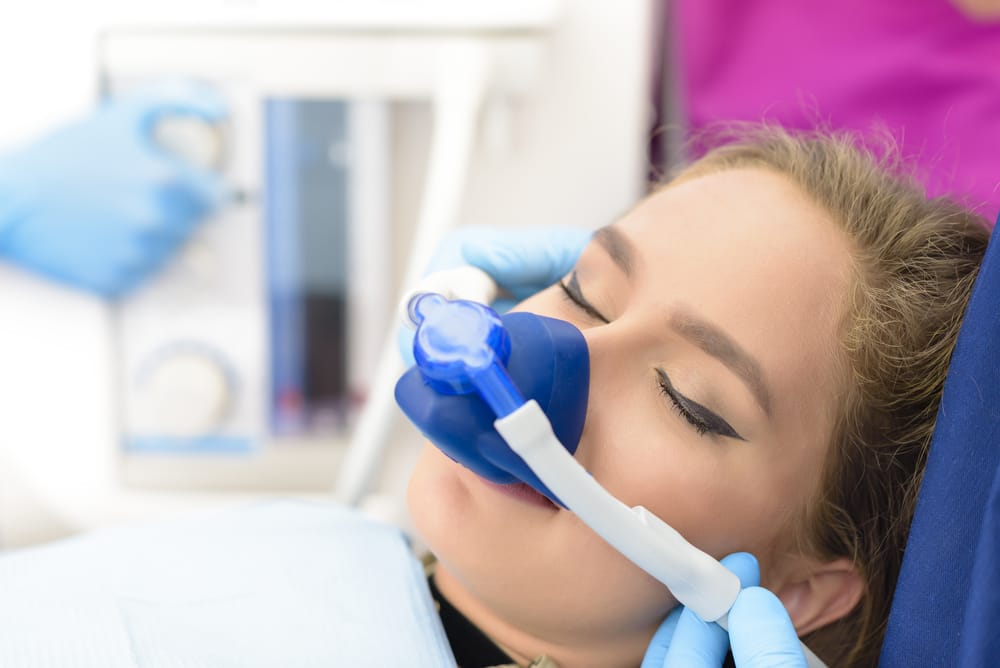
Sedation dentistry uses controlled medication to help anxious patients get through dental care without fear or stress. Dental anxiety causes approximately 15 percent of adults to avoid regular dental care. Millions of adults skip appointments because of anxiety, and that avoidance turns small problems into bigger ones. Understanding your options is the first step toward getting your oral health back on track.
Key Takeaways
- Nitrous oxide provides mild relaxation with immediate recovery, making it ideal for patients with general dental anxiety
- Oral and IV sedation offer deeper relaxation levels for patients who need more anxiety relief during complex procedures
- Proper patient screening and vital sign monitoring make sedation experiences safe when tailored to individual medical needs
- Sedation dentistry helps patients complete necessary treatment they have been avoiding due to fear or anxiety
- Recovery times and driving restrictions vary by sedation type, from minutes with nitrous oxide to hours with oral medications
Nitrous Oxide: The Gentle Introduction to Comfortable Dental Care
Nitrous oxide is the most accessible entry point into sedation, and for many patients, it makes all the difference. Dental anxiety is the most common reason patients choose sedation, and nitrous oxide addresses that anxiety gently, without putting you fully under. According to StatPearls, published by the National Institutes of Health, dental anxiety is the most common reason patients opt for or undergo conscious sedation.
How Nitrous Oxide Works
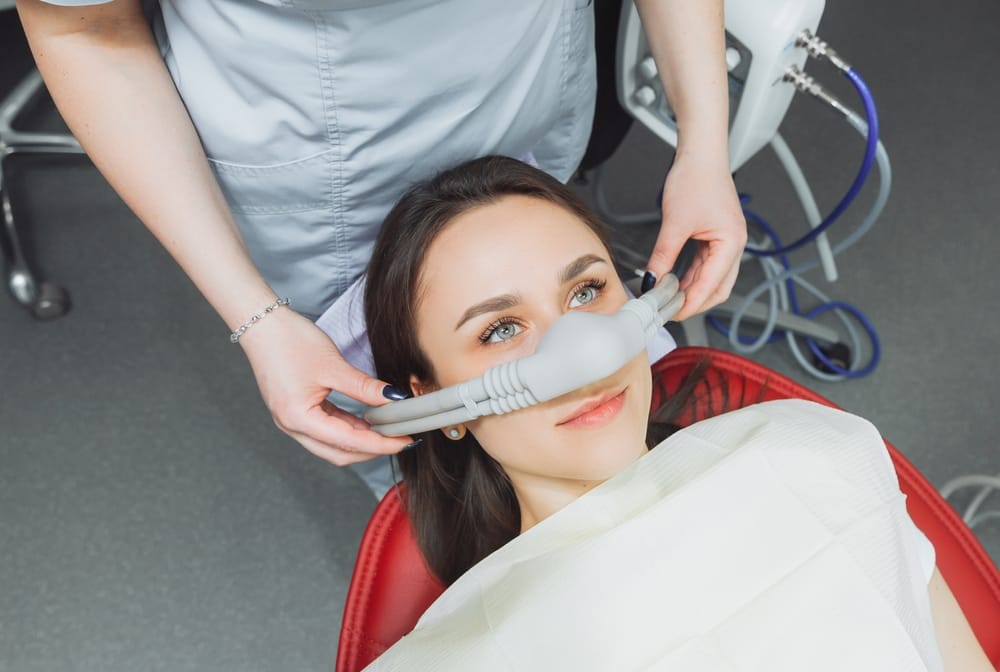
You breathe a colorless, odorless gas through a small nose mask. Effects begin within two to three minutes. Your dental team adjusts the concentration throughout the procedure based on your comfort.
The gas creates a floating, relaxed sensation. You stay awake and can respond to instructions. Most patients describe feeling calm rather than euphoric, though some experience the mild giggly feeling that earned it the “laughing gas” nickname.
What to Expect During and After Treatment
The biggest practical advantage is fast recovery. Once the mask comes off, the gas clears your system in roughly five minutes. You can drive yourself home and return to normal activities right away. No escort required.
Nitrous oxide suits a wide range of routine dental procedures. These include cleanings, tooth-colored fillings, cosmetic bonding, and standard checkups. It helps patients with mild to moderate anxiety move through appointments without dread.
It also helps patients with strong gag reflexes. The relaxed state often reduces that reflex, making X-rays and impressions far more manageable.
Why Nitrous Oxide Has Lasted 150 Years
Some patients worry about losing control. Nitrous oxide does not eliminate your protective reflexes. You can swallow normally and follow directions throughout the entire visit.
Nitrous oxide has been used in dentistry for more than 150 years. That safety record, combined with fast recovery and easy adjustment, makes it the standard starting point for patients who have been putting off dental care.

Oral and IV Sedation: When You Need Deeper Relaxation
For patients with higher anxiety or longer procedures ahead, nitrous oxide may not be enough. Conscious sedation covers a spectrum, from mild anxiolysis to a deeper, more controlled state, and dental professionals use that range deliberately. As defined by the American Society of Anesthesiologists, moderate sedation involves a drug-induced depression of consciousness during which patients respond purposefully to verbal commands and maintain adequate spontaneous ventilation.
Oral Sedation: Planning Ahead for Deeper Calm
Oral sedation uses a prescribed pill, taken about an hour before your appointment. The medication belongs to the benzodiazepine class. These drugs reduce anxiety and produce a drowsy, heavily relaxed state.
Most patients feel deeply relaxed with oral sedation. Many remember very little of the procedure afterward. That amnesia effect is particularly useful for people with severe dental phobia, since they receive care without forming a difficult memory around it.
Root canal therapy, tooth extraction, and multi-step cosmetic work all fit well within the oral sedation window. The extended effect gives your dental team time to complete complex work while you remain relaxed.
IV Sedation: Real-Time Control for Complex Cases
IV sedation delivers medication directly into the bloodstream through a small needle in your arm. The onset is faster than oral sedation, and the dosage adjusts in real time. If anxiety climbs mid-procedure, the team responds immediately.
IV sedation works especially well for patients who have trouble swallowing pills, or for those who need extensive work completed in a single session. Recovery typically takes a few hours, and you still need a driver, but most patients feel significantly clearer by the same evening.
How Dental Professionals Keep Sedation Safe
Safety in sedation starts well before the appointment. A thorough review of your medical history, current medications, and baseline vitals forms the foundation of every sedation plan. Your dental professional uses that information to match you with the right sedation type and level.
Screening, Monitoring, and What Gets Tracked
Medical conditions shape those choices significantly. Heart problems, breathing conditions, liver disease, and certain medications can rule out specific options. Full honesty about your health history is non-negotiable for your safety.
Several vitals are tracked before and throughout every sedated procedure:
- Blood pressure and heart rate establish a baseline before sedation begins
- Oxygen saturation is monitored continuously via a fingertip sensor
- Heart rhythm, breathing patterns, and blood pressure all display together on modern monitoring equipment
Dental professionals who provide sedation must complete specific training courses and maintain current emergency response certification. The American Dental Association sets equipment and monitoring standards for every sedation level offered.
Recovery Standards and Side Effects
Before you leave, your team evaluates your alertness, vital signs, and ability to walk safely. You must meet clear discharge criteria, regardless of whether you have a driver.
Side effects are typically mild. Drowsiness, dry mouth, and slight nausea are the most common. Serious complications are rare when screening and patient monitoring protocols are followed consistently.
Emergency preparedness is built into every sedation appointment. Medications and equipment stay immediately accessible. Most complications are manageable when the team catches them early.
Breaking Free from Dental Avoidance
Avoiding the dentist rarely keeps problems at bay. It usually makes them worse. Small cavities grow into situations that need crowns or root canals. Early gum disease becomes periodontal surgery. The longer the gap, the more involved the eventual treatment.
How Sedation Breaks the Fear Cycle
Fear feeds on itself. Each skipped appointment raises anxiety about what might be found. Sedation breaks that loop by making the actual appointment manageable rather than dreadful.
One major advantage is efficiency. Sedated appointments allow dental professionals to address multiple issues in a single visit rather than spreading them across several anxiety-provoking sessions. Your oral health gets back on track faster.
Many patients find that their fear was worse than the treatment itself. That realization gradually shifts dental care from something threatening to something routine. Some patients eventually return to standard appointments without any sedation at all.
When General Anesthesia Becomes Necessary
General anesthesia goes beyond conscious sedation. It renders patients fully unconscious, with complete airway management required throughout the procedure. This level of care is reserved for specific clinical situations.
Procedures That Require Full Unconsciousness
Oral and maxillofacial surgery often falls into this category. Wisdom tooth removal, jaw surgery, and extensive facial reconstruction require complete muscle relaxation that lighter sedation cannot provide.
Dental implant placements across a full arch in a single session may also benefit from general anesthesia. The surgical complexity and extended treatment time make full unconsciousness the more appropriate choice.
Recovery and Candidacy Considerations
Recovery takes longer than with conscious sedation options. Patients spend time in a dedicated recovery area before discharge and need someone to stay with them through the rest of the day.
Choosing general anesthesia requires careful evaluation of procedure complexity, patient health, and anxiety level. Specialized training and equipment are required, which is why this level of sedation is not available at every dental office.
Understanding Your Sedation Options
Matching the right sedation to the right patient comes down to three factors: anxiety level, procedure complexity, and medical history. No single option fits every situation.
Comparing Nitrous Oxide, Oral, and IV Sedation
Nitrous oxide suits mild to moderate anxiety and routine visits. The fast recovery makes it practical for patients with busy schedules. Oral sedation works better for higher anxiety or longer procedures. The amnesia effect is a genuine benefit for patients with severe dental phobia. IV sedation provides the most control for complex, extended cases where real-time dosage adjustment matters.
How Medical History and Cost Factor In
A simple cleaning might need nothing more than nitrous oxide, while a full cosmetic veneers treatment plan could call for deeper sedation. Medical conditions narrow the options in some cases. Cost and insurance coverage also vary across sedation types.
What is Sedation Dentistry? The Answer That Ends Dental Avoidance
Understanding what sedation dentistry is means recognizing that avoiding the dentist no longer has to be your only option. From gentle nitrous oxide to precisely controlled IV sedation, safe approaches exist for virtually every anxiety level and procedure type. Recovery times, cost, and candidacy all vary, so the right choice starts with a conversation. If fear has kept you away from necessary care, take the next step with Dental Design Studios today!
FAQs
What is sedation dentistry?
Sedation dentistry uses medication to help patients relax during dental procedures. It works for people with dental anxiety, strong gag reflexes, or sensory sensitivities. Options range from mild nitrous oxide to deeper IV sedation, depending on your anxiety level and the complexity of your planned treatment.
What drug is used for IV sedation in dentistry?
The most common drug used for IV sedation in dentistry is midazolam, a benzodiazepine. It works quickly, allows real-time dosage adjustment, and produces a calming amnesia effect. In some cases, dental professionals combine it with other medications based on the patient’s medical history and procedure requirements.
What is conscious sedation dentistry?
Conscious sedation keeps you relaxed but awake during dental treatment. You can still breathe independently, respond to verbal instructions, and communicate with your dental team. It differs from general anesthesia because you never lose full consciousness. Nitrous oxide, oral sedation, and IV sedation all fall within the conscious sedation category.
Is sedation dentistry safe?
Yes, when properly administered. Safety depends on thorough patient screening, accurate medical history disclosure, and continuous monitoring of vitals throughout the procedure. Dental professionals who offer sedation must meet specific training and certification requirements. Serious complications are rare when established protocols are followed consistently by a qualified, well-prepared dental team.
What is deep sedation?
Deep sedation places patients in a controlled state just below full consciousness. You may not respond to verbal instructions and will have little to no memory of the procedure. It requires advanced monitoring and specialized training. Deep sedation is typically reserved for complex procedures or patients with severe dental phobia.
Citations/Sources:
- https://pmc.ncbi.nlm.nih.gov/articles/PMC2945617/
- https://pmc.ncbi.nlm.nih.gov/articles/PMC4780209/
- https://www.ncbi.nlm.nih.gov/books/NBK592406/
- https://www.asahq.org/standards-and-practice-parameters/statement-on-continuum-of-depth-of-sedation-definition-of-general-anesthesia-and-levels-of-sedation-analgesia