
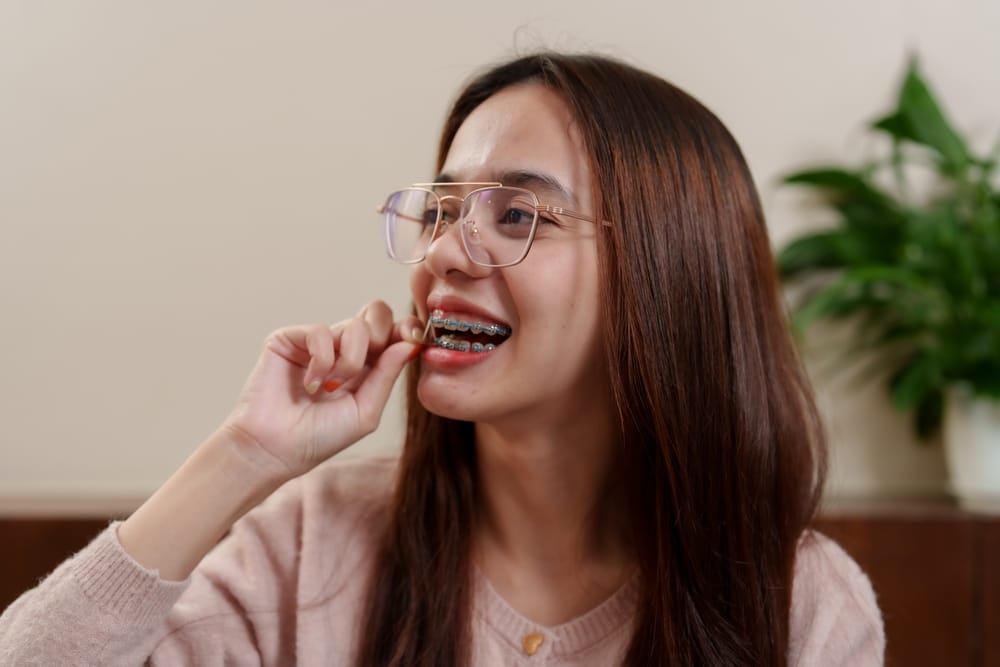
Bleaching teeth with braces is possible, but bracket placement changes how evenly your smile brightens. Metal and ceramic brackets cover part of each tooth, so whitening agents cannot reach the enamel underneath them. Before starting any whitening product, it helps to understand safe concentration limits and enamel protection. Professional treatment often delivers the most even results. Many patients wearing braces still want a brighter smile for photos, events, or everyday confidence, and understanding the process ahead of time can help you avoid disappointment later.
Key Takeaways
- Metal brackets block whitening agents from reaching enamel evenly, so concentration limits and product choice matter.
- Consistent habits like fluoride toothpaste, interdental brushes, and water flossers protect enamel and prevent white spot lesions.
- Professional whitening after debonding day delivers uniform results and allows safe use of desensitizing agents.
- Waiting until braces come off is the safest path to even, lasting results. A dental professional can help you choose the right approach.
- Common questions about whitening with braces, white spots, sensitivity, and post-treatment timing are answered below.
Why Dental Braces and Whitening Treatments Don’t Always Mix
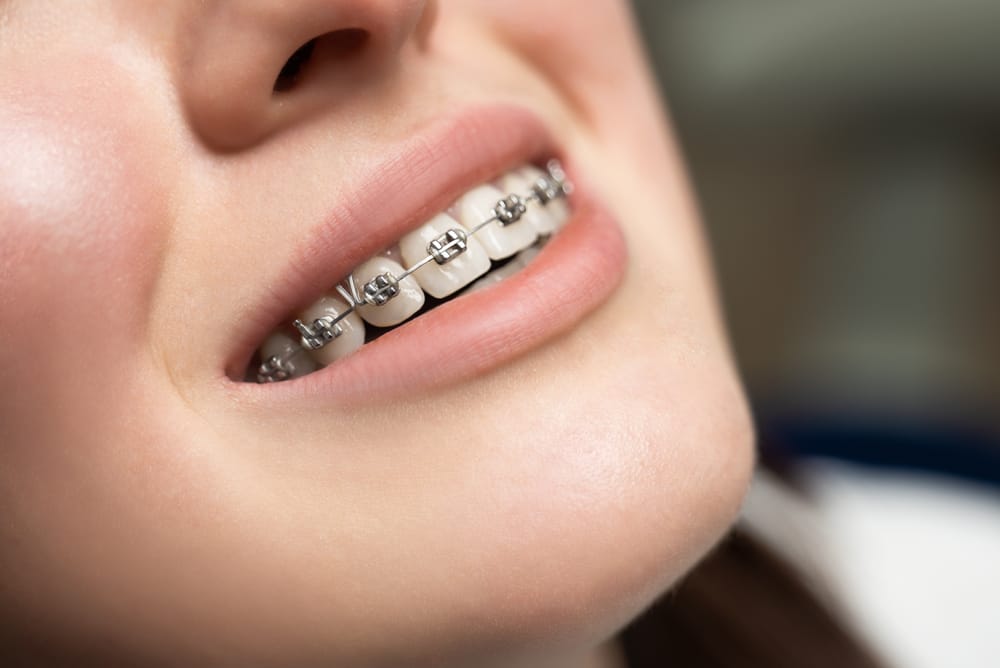
Whitening treatments work by delivering bleaching agents to the tooth surface, but dental braces interrupt that process. Traditional metal braces use brackets bonded to the front of each tooth. Those brackets cover a portion of the enamel, blocking whitening agents from reaching it.
The exposed enamel around the brackets whitens, while the covered enamel stays the same shade. Once the brackets come off, those areas often look yellower than the surrounding tooth surface. That color gap can be just as noticeable as the original staining you wanted to fix.
Ceramic brackets create the same challenge. They have a lower profile than metal brackets, but they still block whitening agents from reaching the enamel beneath them. Whitening strips are built for flat surfaces, so they cannot wrap around brackets evenly, and uneven results are likely. This same limitation applies to whitening pens and paint-on gels, since none of these products can bend around hardware or slip beneath a bonded bracket.
What hydrogen peroxide concentration is safe during orthodontic treatment?
Clinical research supports hydrogen peroxide at 8 to 10 percent for use during active orthodontic treatment. A study confirmed that bleaching at these levels produces measurable color improvement.
Bracket bond strength stays above the minimum needed for safe treatment, ranging from 8% to 10% hydrogen peroxide concentrations. Avoid higher concentrations while braces are in place, since they may weaken the bond between bracket and tooth.
A bracket that detaches mid-treatment extends overall treatment time and requires extra appointments. Research published in BMC Oral Health found that a rebonded bracket can increase the treatment duration by several weeks, and every additional six months of treatment lowers patient compliance with appointments. Bracket stability plays a direct role in keeping orthodontic care on schedule.
Confirm the concentration with a dental professional before starting any whitening product. This is a necessary first step for anyone in active treatment.
Comfort levels vary between patients during bleaching. Some people report increased tooth sensitivity even at lower concentrations. This often occurs around bracket edges, where the enamel transition is more exposed. A dental professional can assess your enamel condition and adjust the protocol before sensitivity becomes a problem.
Oral Hygiene Habits That Protect Enamel and Prevent White Spots
Brackets create small spaces where plaque builds up and is hard to remove. When plaque stays against the enamel, it lowers the pH at that spot. This pulls minerals out of the tooth surface.
This process is called demineralization. The result is white spot lesions, chalky patches that form around brackets and stay visible after treatment ends, since demineralized enamel reflects light differently and takes on a chalky white appearance.
White spots are not just a cosmetic issue. They represent early enamel damage. Adding a whitening product to already-weakened enamel makes the damage worse. Protecting enamel first is the step that makes any whitening result possible.
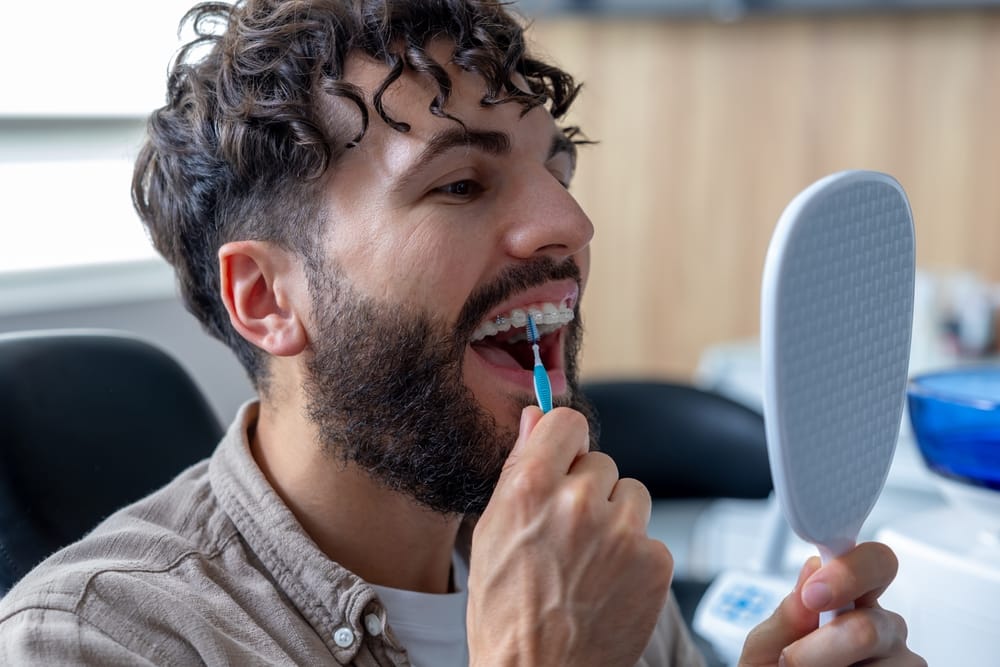
Fluoride toothpaste supports remineralization, helping enamel recover minerals lost through plaque exposure. Brushing twice daily with an electric toothbrush removes more plaque around brackets than a manual brush. A few tools make cleaning between brackets and wires easier:
- Floss threaders guide regular floss beneath the archwire and between teeth.
- Interdental and interproximal brushes reach tight spaces around brackets that a toothbrush misses.
- Water flossers use a pressurized stream to clear food particles and plaque from bracket edges and the gumline.
Building a habit around these tools early in treatment makes a noticeable difference by the time braces come off, since patients who stay consistent from the start tend to see far fewer white spots than those who wait until problems appear.
Professional cleanings during orthodontic treatment are not optional. Dental cleanings remove deposits that home tools cannot clear, since the only way to remove tartar is a professional cleaning. They also give the hygienist a chance to check enamel health before you start any whitening product.
Cutting back on coffee, tea, and dark sauces also reduces the staining load during treatment. A low-abrasion fluoride toothpaste is a safer daily choice than harsh whitening formulas. Abrasive particles in some formulas can be tough on enamel around brackets. Oil pulling has limited clinical support and does not replace fluoride treatments or professional cleanings.
Dental wax applied around sharp bracket edges reduces soft tissue irritation, making it easier to keep up consistent brushing habits. Consistent dental hygiene throughout treatment is what keeps enamel in good condition before any whitening begins.
Professional Whitening and Safe Whitening Gels After Debonding Day
The core problem with whitening during active treatment is not the product itself; it is the geometry. Even a well-formulated whitening gel cannot reach enamel beneath a bracket. Color change happens only on visible surfaces, while covered zones stay the same. This creates post-orthodontic staining, the color difference that shows up once brackets are removed.
Research on tooth whitening during orthodontic treatment found that in-office bleaching is a professionally supervised technique that can safely use higher hydrogen peroxide concentrations for faster results. At-home bleaching with carbamide peroxide is more likely to produce less sensitivity, though it typically requires more time to reach a similar shade. Professional supervision remains the most reliable way to balance predictable color change with sensitivity risk.
Why Debonding Day is the Safest Time for Professional Whitening
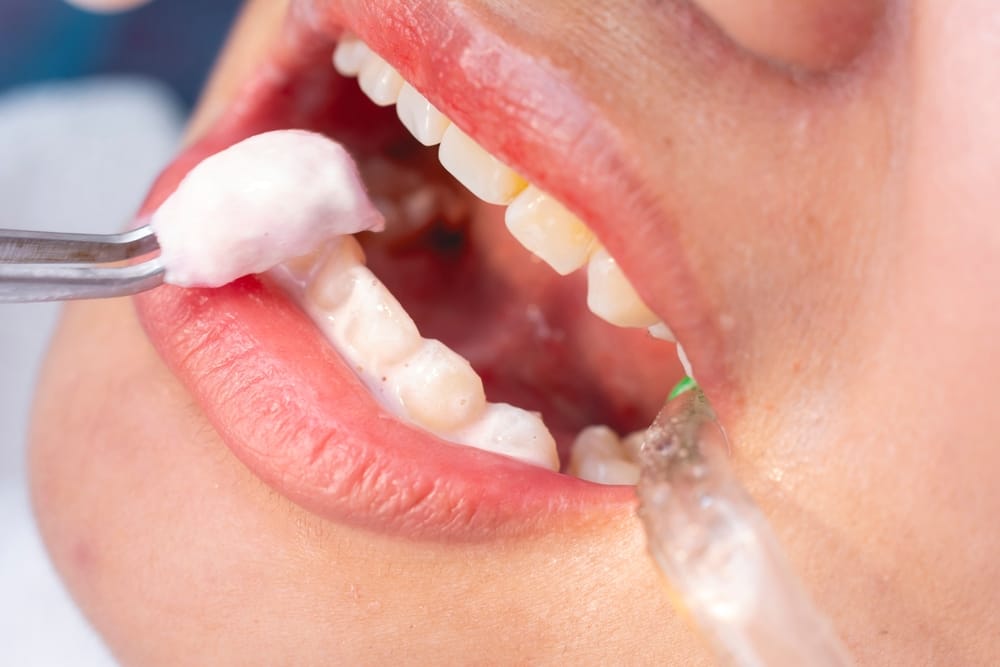
Debonding day removes the brackets and exposes the full tooth surface for the first time. This is when a whitening tray or professional gel can reach all of the enamel at once. Uniform application is not possible while brackets are still in place.
Dental offices that offer professional whitening can apply peroxide-based gels at concentrations that work faster than at-home kits. Common professional whitening options include:
- Opalescence Whitening Products, a category of professional-grade gels used in dental offices.
- Smile Titan Teeth Whitening Gel and Bleach Pro Whitening Teeth Whitening Gel, part of the broader professional whitening kit category.
- Silicon trays, custom-fitted after debonding using the traditional whitening trays method for even gel contact.
Sensitivity is common after braces come off. UltraEZ Desensitizing Gel contains potassium nitrate, which calms nerve sensitivity. Patients can apply it before or after whitening sessions to improve comfort.
The American Dental Association recommends looking for the ADA Seal of Acceptance when choosing whitening products. This seal has served as the leading mark of dental product safety and effectiveness for more than 90 years. Diverse options exist across in-office and at-home categories, and a dental provider can help narrow those choices based on how sensitive your teeth are and how quickly you want to see results.
A minty fresh sensation after whitening is common with many professional-grade gels, but it is not an indicator of effectiveness. Patients should rely on professional guidance rather than sensory cues when judging whether a product is working.
The Verdict on Bleaching Teeth With Braces: Wait or whiten now?
Bleaching teeth with braces is possible within safe concentration limits. Bracket coverage means results stay uneven until the braces come off. Strong oral hygiene throughout treatment protects enamel. It also lowers the risk of white spot lesions that can complicate any whitening outcome.
Waiting until debonding day gives you full surface access, professional-grade whitening options, and the comfort of desensitizing agents without bracket interference. This approach delivers the most even, long-lasting results for most patients. We can assess your enamel condition and recommend the right approach for your situation today!
FAQs
Can you use whitening strips with braces?
Whitening strips aren’t recommended while wearing braces. They’re designed for flat tooth surfaces, so they can’t wrap around brackets or reach the enamel underneath. The result is uneven whitening, with visible strips of contact only on exposed enamel. Most dental professionals suggest waiting until after debonding for consistent, whole-tooth coverage.
Can you use whitening toothpaste with braces?
Whitening toothpaste is generally safe with braces, though results are limited. It targets surface stains rather than deep discoloration, and it can’t remove color differences caused by bracket coverage. Choose a low-abrasion, fluoride-based option to protect enamel. A dental professional can recommend one suited to your specific treatment stage.
Do braces make your teeth yellow?
Braces themselves don’t yellow teeth, but they can create the appearance of uneven color. Brackets block whitening agents and light exposure, so covered enamel stays its natural shade while surrounding enamel may pick up stains from food or drinks. Once brackets come off, this contrast often becomes more noticeable temporarily.
Can you whiten your teeth while wearing braces?
You can whiten during orthodontic treatment, but results will be uneven. Brackets block whitening agents from reaching the enamel beneath them. The covered areas won’t lighten at the same rate as the surrounding tooth surface, which creates a color gap once brackets are removed.
How long should you wait to whiten after braces come off?
Most dental professionals recommend waiting a short period after debonding to let the enamel stabilize before starting whitening treatment. Your dental provider can check your enamel condition and recommend the right timing based on your specific situation.
Citations/Sources:
- https://www.ada.org/resources/research/science/ada-seal-of-acceptance
- https://pmc.ncbi.nlm.nih.gov/articles/PMC11907353/
- https://www.nidcr.nih.gov/health-info/oral-hygiene
- https://pmc.ncbi.nlm.nih.gov/articles/PMC5426141/
- https://pmc.ncbi.nlm.nih.gov/articles/PMC8766193/
- https://pmc.ncbi.nlm.nih.gov/articles/PMC6596175/