

Does baking soda whiten teeth? Only up to a point. Understanding that limit changes how you approach a brighter smile.
Baking soda shows up in whitening toothpastes, DIY recipes, and dental advice all over the internet. What it actually does to your teeth is far more limited than most people assume.
Some staining sits on the surface. Other discoloration lives deep inside the tooth. Knowing the difference determines whether brushing alone will ever get you the results you want.
This guide breaks down where baking soda works and where it stops working. It also covers what closes that gap so that you can make a confident decision about your smile and your budget.
Key Takeaways
- Baking soda removes surface stains through mild abrasion, but it does not truly whiten enamel underneath.
- The color change most people want requires a true bleaching agent, not just abrasive cleaning.
- Hydrogen peroxide is the only widely available agent proven to whiten beyond stain removal.
- Combining baking soda with lemon juice risks permanent enamel erosion, not a brighter smile.
- Professional whitening uses stronger, supervised peroxide concentrations for safer, longer lasting results.
Sodium Bicarbonate as a Surface Stain Remover: What the Research Actually Shows
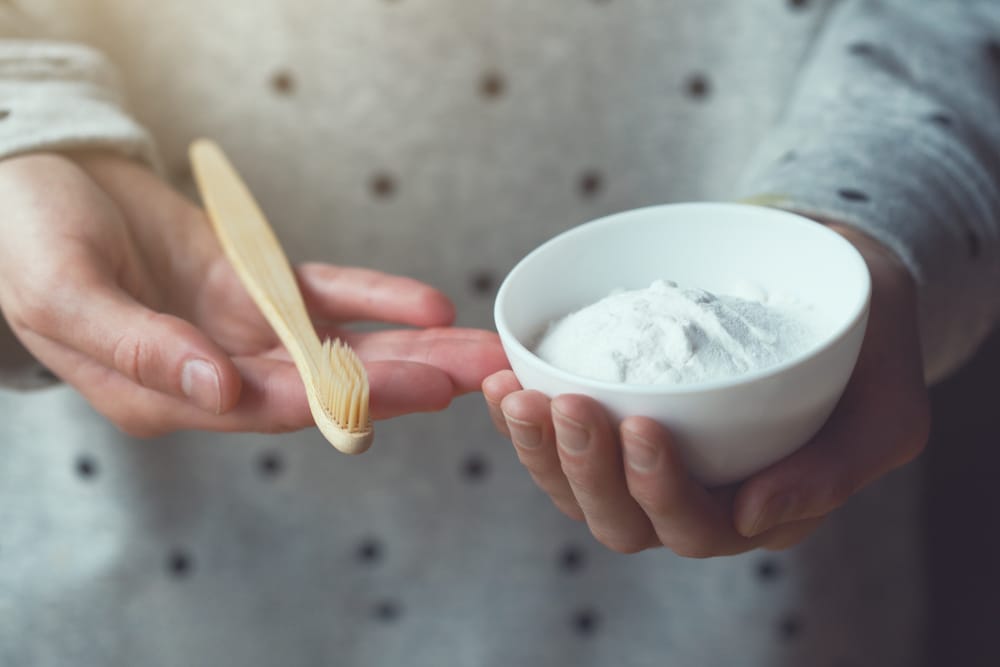
Baking soda works as a whitening agent by scrubbing stain deposits off the enamel surface. The particles are mildly abrasive, and that abrasion lifts pigment left behind by coffee, tea, tobacco, and food. A review in the Journal of the American Dental Association confirms that sodium bicarbonate based dentifrices are effective and safe for tooth stain removal.
The relative dentin abrasivity, or RDA, measures how hard a product scrubs. That number falls within the safety limits regulatory agencies set for daily use. A lower RDA score signals a gentler formula, which is useful information for anyone with sensitive teeth or thinning enamel. Checking that rating helps you choose a toothpaste that cleans without wearing down enamel over time.
Products like ARM & HAMMER™ Baking Soda toothpaste and Sensodyne Clinical White use this abrasive approach. You can find these commercial toothpastes at most grocery stores. They work well when discoloration sits on or just below the enamel surface. Dentists call this surface level staining extrinsic, and it responds well to mechanical stain removal.
Brushing with a baking soda based toothpaste is a reasonable part of an oral healthcare routine if surface stains are your main concern. A manual toothbrush or a powered one both work with these formulas. Results stop at the enamel surface, though, and that ceiling matters more than most product labels suggest.
The Enamel Layer Baking Soda Can’t Reach
Not all discoloration sits on the surface. Some staining starts inside the tooth, in the dentin layer beneath the enamel. This intrinsic discoloration comes from aging, tetracycline exposure, or fluorosis. Research from Mashhad University of Medical Sciences, published in the Journal of Clinical and Experimental Dentistry, shows that intrinsic stains form from endogenic chromogens within the enamel and dentin, a layer baking soda simply cannot reach.
A true bleaching agent must chemically break apart pigment molecules inside the dentin to fix this kind of stain. Hydrogen peroxide and carbamide peroxide do this through a chemical reaction. Baking soda cannot.
Once surface deposits are gone, sodium bicarbonate has done everything it can do. No amount of extra brushing changes that ceiling.
Stain fighting ingredients in some whitening toothpastes slow the return of surface stains between brushings. Bacteria prevention and consistent dental hygiene help preserve clean enamel. Neither substitutes for a bleaching agent when true color change is the goal. This matters most for anyone dealing with stubborn intrinsic stains.
Why Hydrogen Peroxide Outperforms Home Remedies for Teeth Whitening
When researchers compare over the counter whitening agents side by side, the results are clear. A 2023 study in the International Journal of Molecular Sciences found that hydrogen peroxide was the only agent capable of further whitening the teeth beyond stain removal. Sodium bicarbonate stayed limited to surface results.
Hydrogen peroxide works as a true bleaching agent. It changes the actual color of the enamel instead of just buffing away deposits. That distinction matters if your goal is a noticeably whiter smile rather than a cleaner looking one.
OTC products using hydrogen peroxide or carbamide peroxide include whitening strips, whitening trays, and take-home kits. These products contain peroxide at lower concentrations than professional treatments. They still work through the same chemical process and can produce visible change for mild to moderate intrinsic discoloration. Whitening trays that fit closely over the teeth keep the gel in contact with enamel long enough for the reaction to work.
Whitening toothpastes with low-level hydrogen peroxide sit between pure abrasive whitening and true bleaching. They outperform sodium bicarbonate alone for anyone wanting modest improvement without committing to strips or trays.
Home Remedies and Enamel Erosion Risk
Some home remedies are harmless but ineffective. Others carry real risk. Baking soda combined with lemon juice is one of the most searched natural remedies for whitening. It is also one of the most damaging. The Journal of the American Dental Association reports that toothbrushing wear on acid-softened enamel can be 4-fold higher than on sound enamel. The acid in lemon juice softens the enamel layer first. Then the abrasive action of the baking soda strips it away.
The result can be permanent enamel erosion. Apple cider vinegar creates the same problem for the same reason.
Other popular home remedies lack clinical evidence for whitening:
- Activated charcoal is highly abrasive and has raised concern about enamel damage with regular use
- Coconut oil pulling has not been shown to change tooth color in research
- Turmeric powder has no clinical evidence of a whitening effect
- Banana peel rubbing has no clinical evidence of a whitening effect
- Essential oils have no clinical evidence of a whitening effect
Patients with tooth sensitivity or gum inflammation should be careful with any abrasive remedy. Mechanical irritation near the gum line can make both conditions worse.
Teeth bleaching requires a peroxide based chemical reaction. If a home remedy produces any whitening, it is either removing surface stains or it contains a peroxide based agent. Turmeric and banana peel rubbing fall into neither category. They cause little direct harm, but they will not deliver the color change most patients want.
What Professional Teeth Whitening Can Do That at-Home Products Cannot
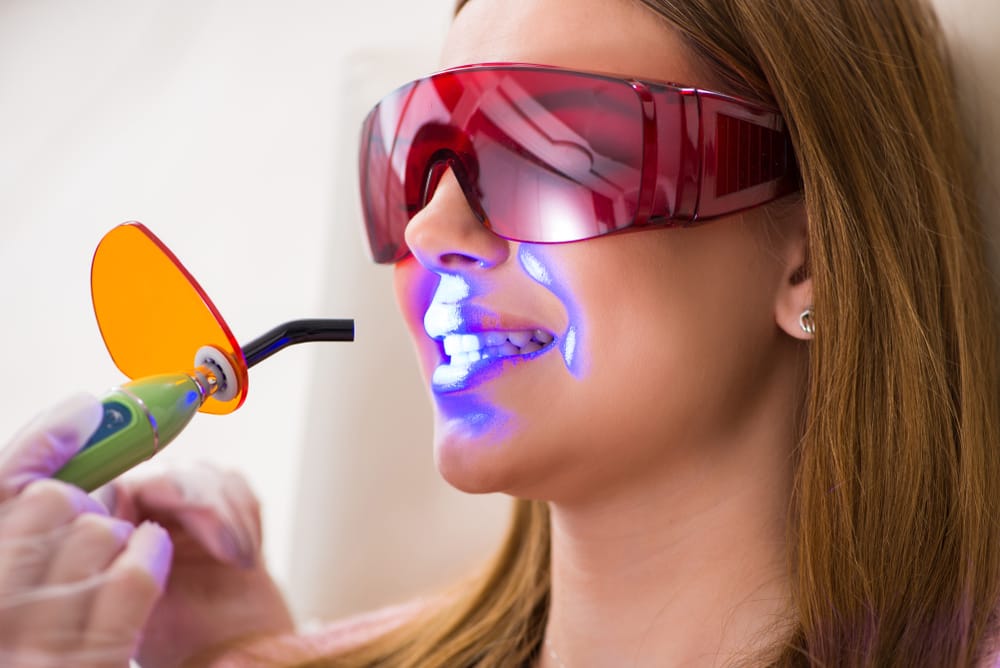
Professional teeth whitening uses the same chemical process as OTC peroxide products, at much higher concentrations. Clinical-grade hydrogen peroxide and carbamide peroxide power professional in-office procedures. These concentrations are far stronger than anything sold in whitening strips or take-home kits. That concentration difference is what makes in-office whitening effective for both extrinsic and intrinsic stains.
Higher concentrations break down stubborn pigment faster, but they also require careful handling. That balance between strength and safety is why professional supervision makes a real difference. Patients considering whitening should know their starting shade and enamel condition first. A quick consultation helps determine which concentration and delivery method fits your needs best. This is especially true for patients who have never had a shade check before.
Concentration alone does not guarantee comfort. Application technique, timing, and gum protection all affect how a patient experiences treatment. This is why in-office visits remain the standard for anyone chasing dramatic results.
Sensitivity Protection and Customized Treatment
One major difference between professional treatment and OTC options is what happens around the whitening process itself. A dental professional can protect your gum tissue during treatment. This prevents the gum inflammation that sometimes results from peroxide contact at the gum line.
Professional care builds in sensitivity protection that OTC products cannot match. This includes applying sensitivity relief before and after treatment and recommending fluoride toothpaste to support enamel health. Patients with sensitive teeth benefit from this level of management, since higher peroxide concentrations need careful application to avoid discomfort.
Professional whitening visits typically include:
- A shade assessment to set realistic expectations
- Gum barrier application to protect soft tissue
- Custom fit trays or in-office application of clinical-grade gel
Dentists also adjust treatment to each patient’s enamel condition and goals. Patients with dental restoration work, cavity fillings, or specific staining patterns need an appointment first. There, a cosmetic dentist can assess their situation before treatment. Whitening agents do not affect restorations the way they affect natural enamel, so color matching becomes a real consideration for anyone with existing work.
Take-home whitening options are also available through a dental office. These kits use custom trays fitted to your teeth, which hold peroxide gel against enamel more consistently than generic OTC trays. The close fit also reduces the risk of gel contact with gum tissue.
So, does baking soda whiten teeth enough to skip the dentist?
Does baking soda whiten teeth on its own? Only to a point, and that point is exactly where most people get stuck. It lifts surface stains well, but it cannot change the natural color underneath. Hydrogen peroxide is the only proven agent for that, and professional-strength concentrations get you there faster and safer than any home remedy. That gap is exactly what a dental professional can help you close.
If you have been brushing consistently and still are not seeing a whiter smile, the issue is not your effort. It is the ceiling of the method you are using. A cosmetic dentist can check your enamel and determine whether your discoloration is surface-level or deeper, then recommend the right treatment for you. Schedule your whitening consultation with us today!
FAQs
How fast does baking soda whiten teeth?
Baking soda works quickly on surface stains, often within a few brushings, since it simply scrubs away pigment sitting on the enamel. It won’t change your tooth’s actual color, though. If you want real whitening beyond stain removal, hydrogen peroxide-based products or professional treatment deliver faster, more noticeable results.
How to whiten teeth naturally?
There’s no proven “natural” method that truly whitens enamel the way peroxide does. Baking soda toothpaste removes surface stains gently, and consistent brushing plus limiting coffee, tea, and tobacco helps prevent new staining. For actual color change, you’ll need a peroxide-based product or a professional whitening treatment.
Does coconut oil whiten teeth?
No clinical research supports coconut oil, or oil pulling in general, as an effective whitening method. It may freshen breath and support oral hygiene in a limited way, but it doesn’t remove stains or change enamel color. For real whitening results, hydrogen peroxide-based products remain the only proven option.
Is hydrogen peroxide safe for teeth?
Yes, when used at appropriate concentrations and as directed. Over-the-counter products contain lower, regulated levels safe for home use, while professional treatments use stronger concentrations under supervision. Overuse or high concentrations without guidance can increase sensitivity, so following product instructions or a dentist’s recommendation matters.
Does dental insurance cover professional teeth whitening?
Dental insurance typically classifies teeth whitening as a cosmetic procedure, so most plans will not cover it. Patients should confirm their specific coverage with their provider before scheduling. A dental office can usually give you a cost estimate during a quick consultation.