

If you’ve ever wondered, does bleaching teeth ruin enamel? You’re not alone. It’s one of the most common questions patients ask before starting a whitening treatment. This guide breaks down what the research actually shows about whitening and enamel safety.
Key Takeaways
- Whitening agents don’t erode enamel when used at standard concentrations.
- Tooth sensitivity is common but temporary, and desensitizing agents reduce it further.
- Over-the-counter products carry more risk since they aren’t customized to your mouth.
- Professional supervision leads to more predictable, satisfying results than store-bought kits.
- A dental professional can catch risk factors that at-home products miss.
What Bleaching Agents Actually Do to Tooth Enamel
Tooth enamel is the hardest tissue in the human body. Bleaching agents don’t dissolve it, but they do interact with it in specific, well-studied ways.
How Peroxide Breaks Down Stains
Hydrogen peroxide and carbamide peroxide are the active ingredients in nearly every whitening product. These compounds break apart the molecules that cause staining. This lifts both surface stains and deeper discoloration inside the tooth.
Concentration is the variable that matters most. Safe and effective when the manufacturer’s protocol is followed, reports a review in the Journal of Evidence Based Dental Practice. Standard whitening concentrations show no measurable enamel erosion in laboratory research. The enamel structure stays intact throughout treatment.
Peroxide molecules are small enough to pass through enamel and reach stained compounds beneath it. They don’t strip away the tooth surface itself. Properly used whitening products don’t cause structural damage.
Higher concentrations tell a different story. Aggressive bleaching or extended exposure time can create temporary changes to enamel microstructure and surface hardness. These changes usually reverse, but more product isn’t automatically better.
Why Enamel Thickness and Age Matter
Enamel thickness varies from person to person, and even from tooth to tooth in the same mouth. Front teeth often have thinner enamel than molars, which is one reason some patients notice more sensitivity near the incisors during treatment. This variation is normal and doesn’t signal a problem with the whitening process itself.
Age plays a role too. Enamel naturally thins slightly over the years, and older patients sometimes need a gentler approach to reach the same result. A dental professional accounts for this when planning concentration and treatment length, which is part of why a one-size-fits-all product can miss the mark.
Managing Sensitivity and Protecting Enamel Between Treatments
The same peroxide penetration that whitens teeth also explains sensitivity. Peroxide reaches the dentin layer beneath enamel, where it briefly irritates nerve endings. This isn’t enamel damage. It’s a short-term reaction that fades once treatment ends.
High-concentration products should not be used without gingival protection, according to research published in the British Dental Journal. Higher concentrations carry more risk of temporary surface changes. Matching product strength to the individual patient reduces that risk.
Simple habits protect enamel between sessions too. Acidic foods and drinks soften enamel temporarily, so brushing right after eating them can speed up wear. A soft-bristled brush and fluoride toothpaste support remineralization between treatments.
Enamel remineralization is a gradual process, not an overnight fix. Saliva naturally redeposits minerals onto the tooth surface throughout the day, which is part of why staying hydrated and avoiding constant snacking supports enamel health. Giving your enamel time to recover between whitening sessions helps preserve the results long term.
Tooth Sensitivity and the Risk Profile of Over-the-Counter Products
Tooth sensitivity is the side effect most patients notice first. It’s most frequently reported adverse effect during bleaching treatments, though the exact rate varies by product and concentration. The effect is temporary and resolves after treatment ends.
How Common Sensitivity Is and What Helps
Sensitivity usually drops when desensitizing agents join the process. Potassium nitrate and fluoride, applied before or during bleaching, calm the nerve response in the dentin. Desensitizing gels are standard in professionally supervised whitening.
The Hidden Risks of Over-the-Counter Whitening
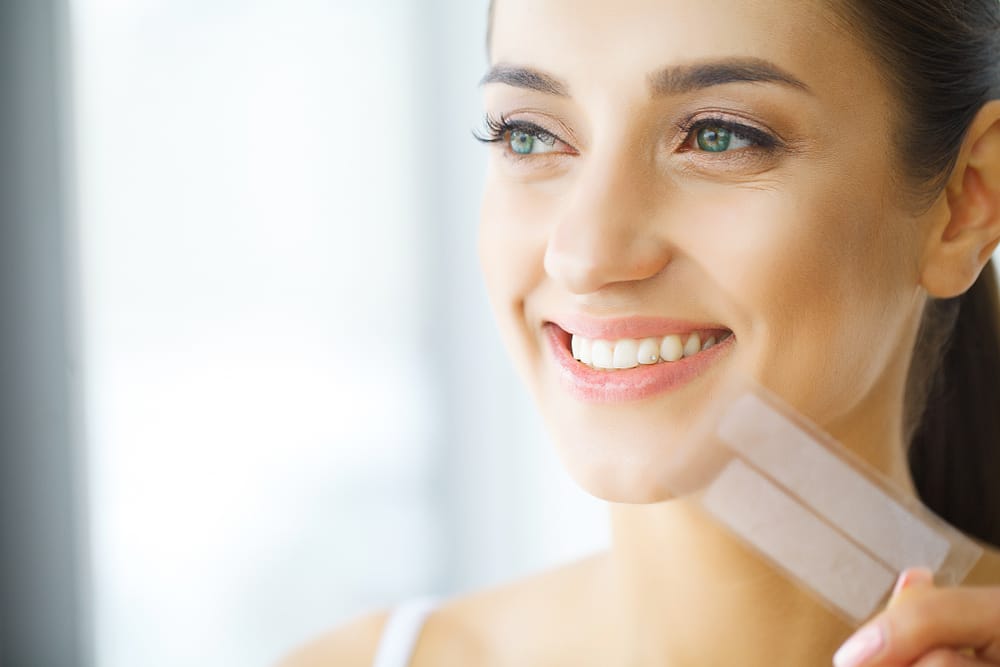
Over-the-counter whitening strips and store-bought kits work differently. There’s a lack of consistent research protocols and data behind many of them, notes a study in the International Journal of Molecular Sciences. These products often lack the safety data that professional treatments are built around. Concentrations and application times don’t match your tooth structure or gum health.
A person with early gum disease uses the same over-the-counter product as someone without it. Results can differ significantly between the two. This is the core risk behind unsupervised whitening.
The pH level of a whitening product matters just as much as its peroxide concentration. Products with a low, more acidic pH can soften enamel independently of the bleaching reaction itself. Many store-bought kits don’t list pH information on the packaging, which makes it hard for patients to judge this risk on their own.
Watch for warning signs that a product isn’t working well for your mouth. Sharp, lingering pain instead of mild tingling, white or chalky spots on the enamel, and gum irritation that doesn’t fade within a day are all reasons to stop use and check with a dental professional. These symptoms go beyond the normal, temporary sensitivity most patients experience.
Oral hygiene habits shape whitening outcomes too. Patients who keep up with regular dental cleanings and checkups tend to start treatment with a cleaner baseline. Plaque buildup can interfere with how evenly bleaching agents reach the tooth surface.
Whitening Toothpastes and Charcoal Toothpaste
Whitening toothpastes lean on mild abrasives rather than peroxide chemistry. Used occasionally, they’re generally safe for most people. Overuse, though, wears down enamel through friction instead of chemistry.
Charcoal toothpaste has become a popular natural whitening option. The evidence doesn’t support it. Charcoal is highly abrasive, and frequent use links it to enamel erosion and increased sensitivity.
Other natural remedies, like baking soda pastes or oil pulling, circulate widely online. These methods may polish away light surface stains, but they don’t reach the deeper discoloration that peroxide-based products target. Relying on them alone often leads to disappointing results and unnecessary enamel wear.
Avoid high-concentration hydrogen peroxide products without proper gum protection. Also avoid bleaching entirely when gum tissue is diseased or damaged. Oral health before whitening determines whether treatment is appropriate at all.
Why Professional Supervision Changes the Outcome of Whitening Treatments
Professional supervision is the biggest factor separating safe whitening from risky whitening. A study in the Journal of Pharmacy and Bioallied Sciences found that patient satisfaction was highest in the in-office bleaching group. Comparisons between in-office bleaching, at-home trays, and over-the-counter products found professional treatments produce more predictable results. A growing retail market doesn’t guarantee equal outcomes across products.
What Happens During a Professional Whitening Appointment
A dental team’s role goes well beyond applying a gel. Before treatment starts, the provider checks tooth structure, existing restorations, and gum health. This determines whether whitening is appropriate and at what strength.
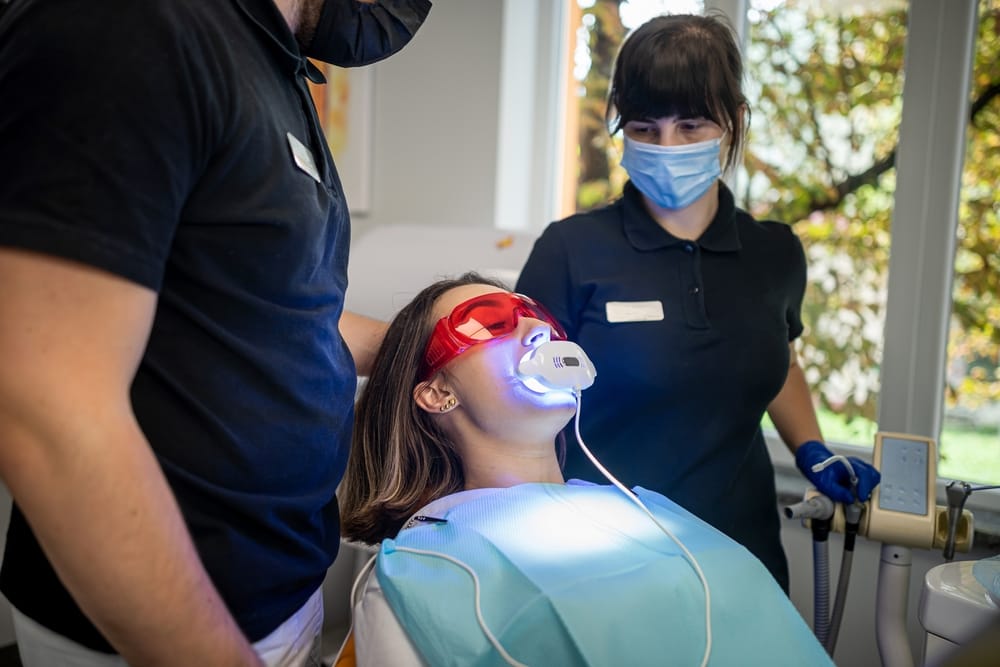
During in-office treatment, a gum barrier protects soft tissue from peroxide contact. The team monitors sensitivity throughout the appointment. They can adjust concentration or timing if discomfort comes up.
In-office options with light activation speed up the whitening process. A specialized lamp activates the peroxide gel without requiring a stronger formula. Supervision and gum protection stay in place throughout.
In-Office vs. Custom Take-Home Options
Custom take-home kits offer a slower, more controlled alternative for patients who want it. These trays come from impressions of your own teeth. That keeps the gel evenly against the tooth surface and away from the gums.
Custom trays outperform generic, one-size-fits-all trays sold in stores. Generic trays often let gel pool against the gums, which can be irritating.
Who Should Wait Before Whitening
A dental professional can catch reasons not to whiten that store products miss entirely. Active gum disease, untreated decay, and certain restorations all affect whether whitening is safe. The right plan, built around your specific oral health, produces results store-bought kits can’t match.
Not everyone is a good candidate for whitening right away. Patients with untreated cavities, thin enamel, or highly sensitive teeth may need other treatment first. A dental professional can address these issues before whitening so the results last and the process stays comfortable.
Results from professional whitening also don’t disappear overnight. Most patients benefit from occasional touch-up sessions to maintain their shade, especially if they consume a lot of coffee, tea, or red wine. Spacing these touch-ups out, rather than over-bleaching between visits, protects the enamel while keeping the smile bright.
Lifestyle habits affect how long results last. Coffee, red wine, tobacco, and acidic foods all contribute to stains returning over time. Rinsing after these foods and cutting back on tobacco helps results last longer.
The Final Word: Does bleaching teeth ruin enamel or not?
So, does bleaching teeth ruin enamel? The evidence says no, as long as it’s done at the right concentration with proper guidance. Sensitivity is common but temporary, and professional supervision consistently produces safer, more predictable results than store-bought alternatives.
The biggest factor in a safe outcome isn’t the product itself. It’s whether a dental professional guides the process, checks your oral health, and matches treatment to your needs. That guidance is what separates a bright, comfortable smile from unnecessary risk.
If you’re ready to find out what whitening option fits your smile, our team is here to help!
FAQs
How does peroxide concentration affect enamel safety during whitening?
Standard concentrations of hydrogen peroxide and carbamide peroxide haven’t shown measurable enamel erosion in research. Higher concentrations can cause temporary changes to enamel hardness. A dental professional picks the right concentration for your teeth and gum health. This makes professional treatment safer than picking a product off the shelf.
Does teeth whitening work on dental restorations like crowns or veneers?
Dental crowns and dental veneers don’t respond to bleaching agents the way natural tooth structure does. Their shade is fixed when they’re made. A dental professional should review existing restorations before whitening begins for consistent colour across your smile.
Can patients with dental implants safely whiten their teeth?
Dental implants are not affected by whitening agents. The implant crown is made from a material that doesn’t bleach. A dental professional should review the full mouth, including any restorations, before whitening to support a uniform result.
Can teeth whitening damage gums?
Whitening gel can irritate gums if it touches soft tissue directly, causing temporary redness or a mild burning feeling. This isn’t permanent damage and usually fades within a day. Professional treatments use a gum barrier to prevent contact entirely, which is one reason supervised whitening carries less risk than at-home application alone.
Are whitening strips bad for your teeth?
Whitening strips aren’t inherently bad, but results depend on proper use. Overuse or leaving strips on longer than directed can increase sensitivity and stress enamel over time. Since strips aren’t customized to your teeth or gum health, a dental professional can help you decide if they’re a safe fit for your smile.