
Dental veneers for missing teeth sound like a simple fix, but veneers cannot replace a missing tooth because they bond to existing tooth structure. Understanding how implants, bridges, and veneers each serve a different role, and in what order to use them, protects your oral health for decades.
Key Takeaways
- Missing teeth require solutions that address both the root and crown to stop bone loss
- Dental implants fuse with the jawbone to create the strongest long-term tooth replacement available
- Veneers improve the look of existing teeth but cannot fill spaces where teeth are gone
- The correct sequence is tooth replacement first, then cosmetic improvements to surrounding teeth
- Knowing your options early helps you choose a plan that fits your health, timeline, and budget
Replacing Missing Teeth Requires Complete Solutions
Losing a tooth sets off a chain reaction that most people do not expect. The gap triggers jawbone loss, causes neighboring teeth to shift, and creates bite problems over time. By the time you notice these changes, treatment has become more complex.
The Hidden Cost of a Single Missing Tooth
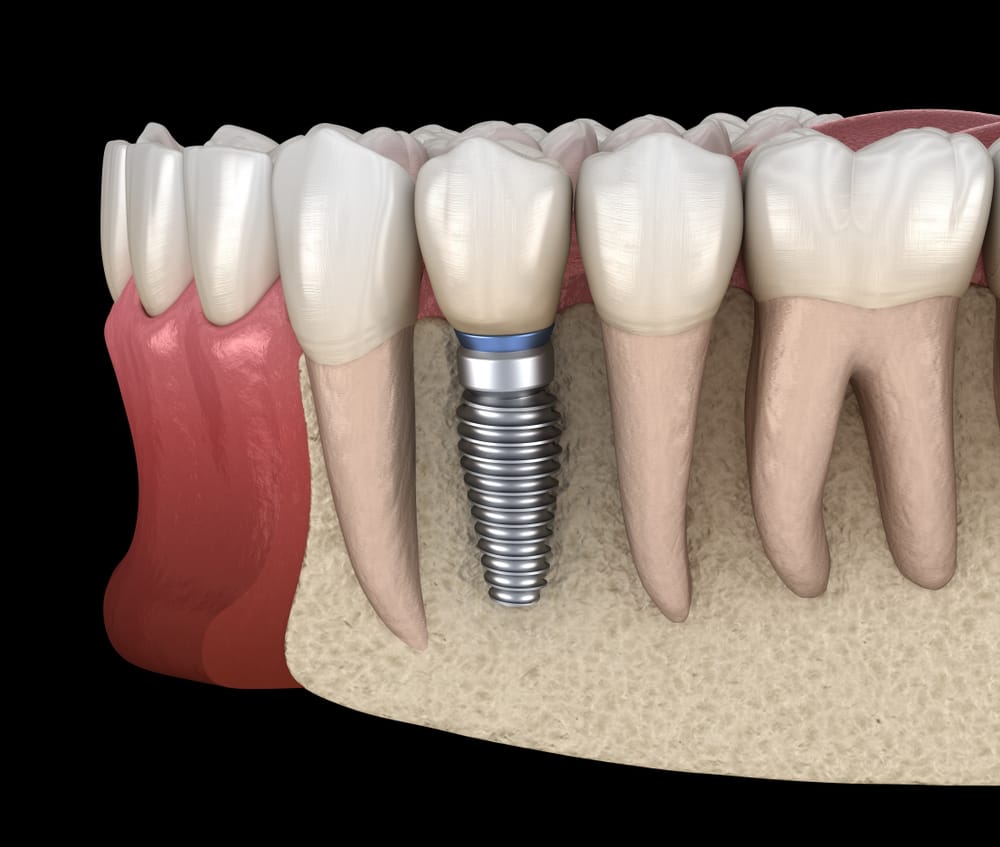
Tooth replacement must address both the root and the visible crown. Your natural tooth root stimulates the jawbone with every bite, keeping the bone dense and healthy. Without that pressure, the alveolar bone begins to shrink through a process called resorption, which can start within weeks of tooth loss.
As Harvard Health explains, missing teeth can alter your bite and weaken your jawbone and affect more than your appearance.
Why Location and Health History Matter
Different situations call for different solutions. A single missing front tooth demands quick action for both speech and aesthetics. The University of Illinois Chicago College of Dentistry notes that a single missing molar can affect how you chew, making back-tooth loss a functional concern, not just a cosmetic one.
Your bone density, age, medical history, and the location of missing teeth all shape which treatment will work best. Conditions like diabetes can slow healing, and blood thinners require extra surgical planning. Your dentist uses cone beam CT scans to measure bone volume and quality before recommending any path forward.
Gum disease must be resolved before any major restorative work begins. Active periodontal disease destabilizes the foundation that implants and bridges depend on. Treating the gums first gives your restorations the best chance of lasting.
Waiting too long to replace a missing tooth often makes treatment more involved than it needs to be. As bone resorption continues, the space available for an implant can shrink, sometimes requiring grafting that would not have been necessary with earlier treatment. Neighboring teeth may also tilt into the gap, throwing off your bite and complicating future restorative work.
This is why dentists generally recommend addressing tooth loss within the first few months rather than postponing the decision. Acting early keeps your options open, often results in a simpler procedure, and tends to be more cost-effective than addressing complications down the line.
Dental Implants Preserve Bone and Function
Dental implants are the gold standard for replacing missing teeth because they address both the visible tooth and the hidden root. No other option fully replicates natural tooth function.
How Osseointegration Works
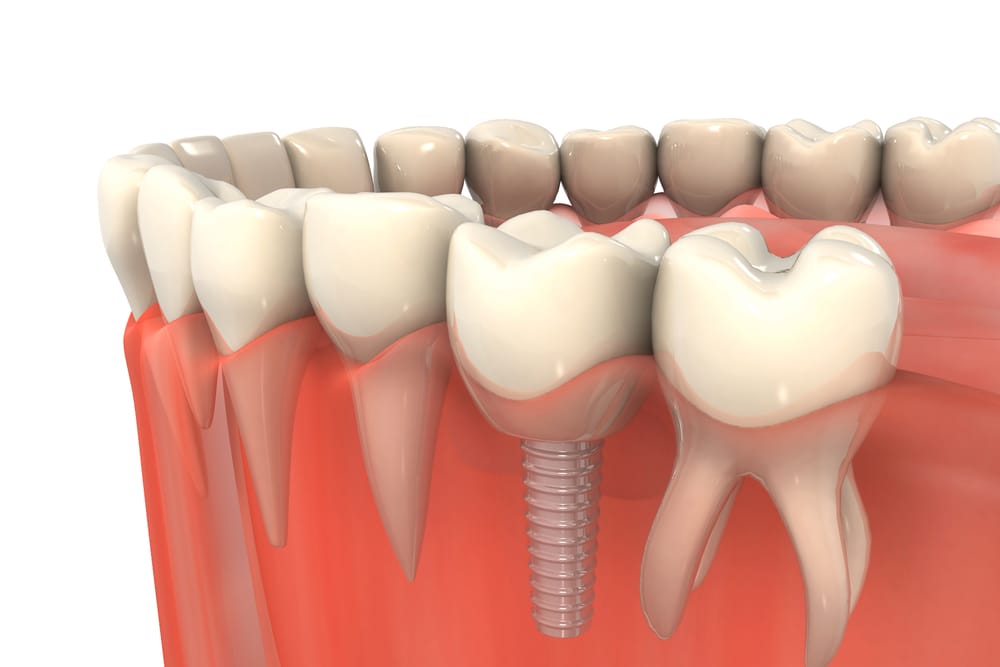
The secret is a biological process called osseointegration. The European Journal of Dentistry confirms that the basis for dental implants is osseointegration, where osteoblasts grow and directly integrate with the titanium surface of the implant post, anchoring it as firmly as a natural root.
This matters for several reasons:
- Implants preserve bone volume, preventing the facial changes that come with bone loss
- They leave neighboring healthy teeth completely untouched
- Traditional bridges require grinding down adjacent teeth to serve as anchors, even when those teeth are perfectly healthy
- Implants are easier to clean and typically last 25 or more years with proper care
Planning, Grafting, and Full-Arch Options
Your dentist plans each implant using 3D imaging that maps bone density, nerve positions, and sinus locations. If bone volume is insufficient, procedures like bone grafting or sinus lifts can rebuild it before placement.
For patients missing a full arch, All-on-4 dental implants use just four strategically placed posts to support a complete set of teeth. This technique often avoids bone grafting by using angled implants that reach denser areas of the jaw.
Healing typically takes three to six months. During that time, temporary restorations keep you functional and comfortable. Same-day implants are possible in select cases, but most patients benefit from the full healing period before receiving permanent crowns.

Porcelain Veneers Enhance Existing Teeth
Veneers are a cosmetic tool, not a tooth replacement. Understanding the distinction saves patients from costly mistakes and delays in their treatment plan.
What Veneers Can and Cannot Do
A clinical report published in Clinical Case Reports states that the treatment of choice should be the least invasive option that satisfies the expected esthetic and functional objectives. Where no tooth exists, veneers cannot satisfy functional objectives at all. They bond to the front surface of a natural tooth to change its color, shape, or size. Without a tooth underneath, there is nothing for the veneer to attach to.
Veneer placement involves removing a thin layer of enamel, taking precise impressions, and wearing temporary veneers while the dental lab creates the custom restorations. The process typically takes two to three weeks from preparation to bonding.
Combining Veneers with Implant Treatment
What veneers do exceptionally well is create a unified, polished smile across existing teeth. They close small gaps, lengthen worn edges, and mask discoloration. Porcelain resists staining better than natural enamel and can maintain its appearance for ten to fifteen years with proper care.
When veneers are planned alongside implant treatment, the implant crown gets designed in advance to match the planned veneer shade and shape. This coordination allows the entire smile to look cohesive once treatment is complete.
For minor cosmetic concerns, cosmetic bonding offers a faster, less invasive alternative. For teeth with extensive damage or large fillings, a full crown provides better structural protection than a veneer.
The Treatment Sequence That Works
Getting the sequence right is just as important as choosing the right treatment. Skipping steps or reversing the order leads to poor outcomes, mismatched shades, and wasted investment.
The Step-by-Step Order Your Dentist Follows
Here is the correct order:
- Address active gum disease and infection first
- Place dental implants and allow full osseointegration (three to six months)
- Attach final implant crowns after gum tissue has healed and settled
- Design and place veneers on adjacent natural teeth last, matching the established implant crown color
Temporary restorations keep you functional throughout the implant healing phase. These provisionals also help shape the gum tissue around the emerging restoration, creating natural-looking contours for the permanent crown.
Why Veneers Always Come Last
Veneers must come last because gum position and tissue color change as healing progresses. Placing veneers before the implant work is complete makes accurate shade matching nearly impossible.
The full timeline from implant placement to finished veneers typically runs four to eight months. Cases requiring bone grafting may take longer but produce more stable long-term results. Follow-up visits throughout the process catch small issues before they affect the outcome.
Dental Veneers for Missing Teeth Are Only Half the Plan
Dental veneers for missing teeth cannot work on their own because they need existing tooth structure to function. The right plan starts with replacing what is missing, restoring bone health, and then perfecting the surrounding smile with cosmetic treatments like veneers. Getting the sequence right protects your investment and your long-term oral health. If you are weighing your options for replacing missing teeth, schedule a consultation with us to find out which approach fits your situation!
Can you get veneers with missing teeth?
Veneers cannot be placed over a gap. They bond directly to the front surface of a natural tooth, so a missing tooth must be replaced with an implant, bridge, or denture first. Once the space is filled and healed, veneers can be added to surrounding teeth for a uniform smile.
Do veneers ruin your teeth?
Veneers require removing a thin layer of enamel, which is permanent. That said, the preparation is minimal and the tooth remains intact underneath. With proper placement and routine care, veneers protect the tooth surface rather than damage it. Choosing a skilled dentist significantly reduces the risk of complications.
What happens to teeth under veneers?
The tooth underneath a veneer stays alive and functional. Your dentist removes only a small amount of enamel before bonding the porcelain shell. The natural tooth continues to support the veneer from below. Regular checkups catch any issues like decay or gum changes before they affect the restoration.
Are veneers fake teeth?
Veneers are not fake teeth. They are thin porcelain shells bonded to the front of your real teeth to improve color, shape, or size. The natural tooth stays in place underneath. Veneers enhance what is already there rather than replace it, making them a cosmetic improvement, not a substitute.
How long should I wait between getting an implant and veneers?
Most dentists recommend waiting three to six months after the implant crown is placed before getting veneers on neighboring teeth. This allows gum tissue to heal and stabilize fully. Accurate color matching between the implant crown and veneers requires the tissue to settle into its final position first.
Citations/Sources:
- Harvard Health: Two options for replacing lost teeth — https://health.harvard.edu/oral-health/two-options-for-replacing-lost-teeth
- University of Illinois Chicago College of Dentistry: Dentures and Implants: Solutions for Missing Teeth — https://dentistry.uic.edu/patients/dental-services/general-family-dentistry/dentures-and-implants-solutions-for-missing-teeth/
- European Journal of Dentistry: Complications in implant dentistry — https://www.ncbi.nlm.nih.gov/pmc/articles/PMC5379828/
- Clinical Case Reports: Replacement of missing lateral incisors with lithium disilicate glass-ceramic veneer-fixed dental prostheses — https://pmc.ncbi.nlm.nih.gov/articles/PMC4184647/