

IV sedation is a dental sedation method that delivers calming medication directly into your bloodstream, keeping you relaxed, breathing on your own, and responsive throughout your procedure. It is not general anesthesia. Understanding the difference can make your decision about dental care much easier.
Key Takeaways
- IV sedation uses midazolam through an IV line to create deep relaxation while keeping you conscious and responsive
- Patients retain their protective reflexes and continue breathing independently, unlike with general anesthesia
- Your dental team monitors vital signs in real time and can adjust medication instantly through the IV line
- Recovery begins within 15 to 30 minutes, but you will need a responsible adult to escort you home
- Most healthy adults qualify for IV sedation after a medical history review with their dentist

IV Sedation Dentistry
IV sedation delivers medication directly into your bloodstream through a small tube placed in your arm or hand. The most common medication used is midazolam, a fast-acting drug that causes anterograde amnesia, meaning most patients have little to no memory of the procedure, according to StatPearls.
You enter what dentists call a twilight state. You stay conscious, can follow simple instructions, and feel deeply drowsy and disconnected. Most patients recall arriving at the office and then waking up with their dental work complete.
What the Twilight State Actually Feels Like
Most people expect IV sedation to feel like being knocked out. It does not. You remain aware enough to respond to your dentist but too relaxed to feel anxious or uncomfortable. Time seems to compress. A two-hour procedure can feel like a few minutes.
Which Dental Procedures Benefit Most
This approach works especially well for lengthy or complex procedures. Here are the treatments that benefit most:
- Dental implant placement, which can take several hours and requires precise surgical steps
- Wisdom tooth removal, including impacted extractions that involve sectioning the tooth or removing surrounding bone
- Bone grafting, which involves moving tissue and placing graft material over extended time
- Periodontal surgery, where strong gag reflexes can interfere with detailed work on infected tissue
- Root canal therapy on molars, which requires extended time with your mouth open
How the Dental Team Controls Your Sedation Level
Your dental team can adjust medication levels throughout the procedure. If you become more alert, they add more medication through the IV line immediately. If you become too drowsy, they reduce or stop it.
No other sedation method gives your dentist this level of real-time control.
Before starting sedation, your dental team establishes baseline measurements of your blood pressure, heart rate, and oxygen levels. These readings help them track how your body responds as the procedure progresses.
General Anesthesia Comparison
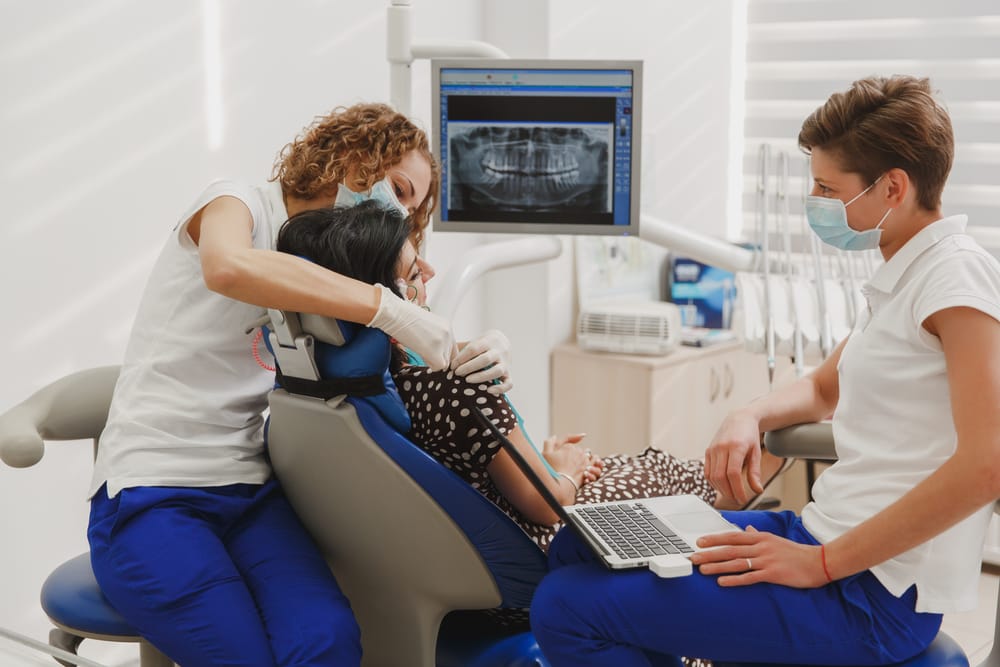
IV sedation and general anesthesia feel similar to patients but work in fundamentally different ways. With IV sedation, the goal is preserving the patient’s ability to independently maintain oxygenation and airway control throughout the entire procedure, as outlined in StatPearls.
Why General Anesthesia Carries Higher Risk
General anesthesia shuts these reflexes down completely. Patients cannot breathe independently and require a breathing tube placed in the trachea. That tube can cause throat soreness and complications. IV sedation avoids that step entirely.
What the Research Shows
Research comparing these methods during third molar removal found clear advantages for IV sedation. The general anesthesia group had longer anesthesia and surgery durations compared to those who received IV sedation. Stable blood pressure means better circulation and lower risk of complications.
Patients who received IV sedation also needed fewer pain medications after surgery compared to those under general anesthesia. Fewer pain medications mean fewer side effects, less nausea, and faster overall healing.
Recovery and Cost Differences
Recovery time strongly favors IV sedation. General anesthesia can leave patients confused, nauseated, and disoriented for several hours. Most people recover from IV sedation within an hour of stopping the medication. You still need a driver, but you feel more alert and comfortable much sooner.
The cost difference is also substantial. General anesthesia requires a specialized physician, hospital-grade equipment, and often a facility fee. IV sedation can be safely administered in a regular dental office by trained dental professionals, making it far more accessible for most patients.
Vital Signs Monitoring
Safe IV sedation depends entirely on continuous, real-time monitoring throughout your procedure. Monitoring of blood pressure decreases the likelihood of adverse outcomes related to sedation during dental procedures, notes Anesthesia Progress. The American Society of Anesthesiologists requires this monitoring at every level of sedation to catch problems before they become serious.
What Your Dental Team Tracks During Your Procedure
Your dental team tracks four core functions throughout your procedure:
- Blood pressure, checked automatically every few minutes by a cuff
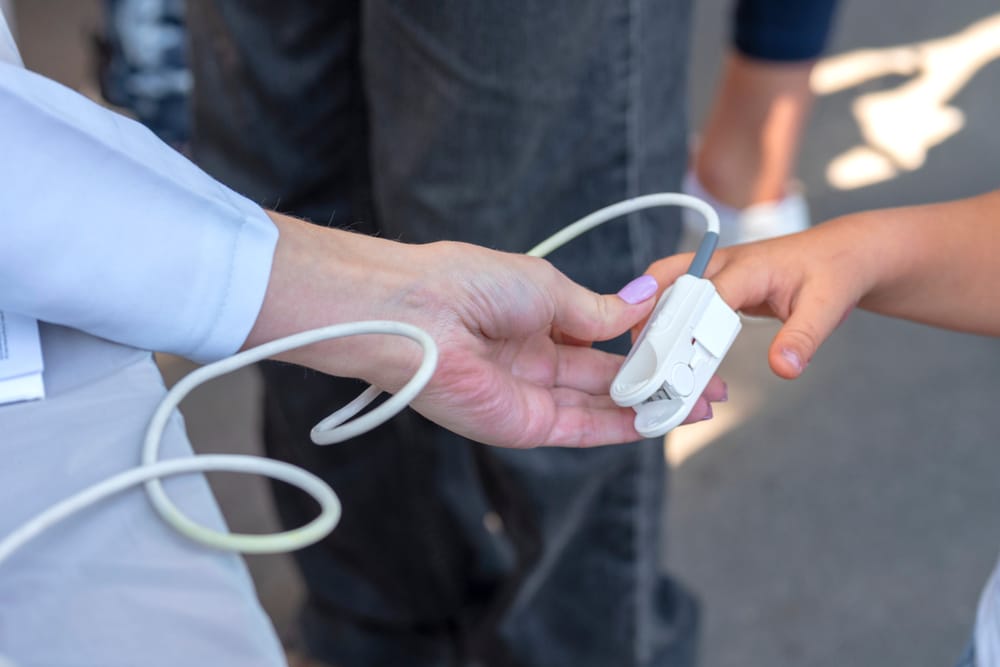
- Oxygen saturation, measured by a pulse oximeter clipped to your finger, with alarms set below 95%
- Breathing rate and depth, monitored by watching chest movement and listening to breath sounds
- Heart rhythm, tracked to detect irregular patterns that may signal underlying issues
Why IV Beats Oral Sedation for Safety
IV sedation holds a significant safety advantage over oral sedation. When you swallow a sedation pill, its effects cannot be easily reversed. Once absorbed, it continues working for hours regardless of how you respond.
With IV sedation, your dentist can stop, reduce, or increase medication instantly through the same line. If problems develop, reversal medications like flumazenil can counteract midazolam within minutes.
Laughing gas offers some reversibility since it clears through your lungs quickly, but it provides far lighter sedation and is not suitable for complex procedures.
How Monitoring Prevents Problems Before They Start
The monitors also track trends over time. Your dental team can see if blood pressure is gradually rising from stress or if your heart rate is responding normally. This pattern data guides medication decisions before any problem develops.
Recovery and Aftercare
Recovery from IV sedation begins as soon as your dentist stops the medication. Most patients start feeling more alert within 15 to 30 minutes, though the medication continues affecting your judgment and reaction time for several hours.
What Happens Right After Your Procedure
You will stay in the dental office under observation until your vital signs are stable and your dental team clears you to leave. A responsible adult must drive you home and stay with you for the rest of the day.
Your 24-Hour Recovery Checklist
Key recovery guidelines to follow for the first 24 hours:
- No driving or operating machinery
- No alcohol, which interacts dangerously with lingering sedation medication
- Start with clear liquids, then move to soft foods like yogurt, soup, or mashed potatoes
- Rest and avoid exercise, which can cause unexpected reactions to remaining medication
- Avoid making complex decisions about work, finances, or family matters
Side Effects to Expect and When to Call Your Dentist
Some mild side effects are normal. Drowsiness is the most common and typically clears within a few hours. Nausea may occur if you eat too soon. Dizziness when standing can happen because sedation medication affects inner ear balance. Move slowly and sit down if you feel lightheaded.
The memory effects of IV sedation mean you may not recall instructions given at the office. Research confirms that the need for written and oral postoperative instructions to both the patient and their escort is emphasized, as reported in the Journal of the Canadian Dental Association. Written instructions should stay accessible throughout your recovery day.
Contact your dental team if you experience trouble breathing, chest pain, or confusion that does not improve with time. These are rare but require immediate attention.
Is IV sedation the safer choice for your next dental procedure?
IV sedation provides a safe, effective way to stay comfortable during dental procedures while keeping your protective reflexes and independent breathing intact. Real-time medication control and continuous monitoring create a safety profile that surpasses both oral sedation and general anesthesia for most dental treatments. Recovery is faster than general anesthesia, though you still need an escort home and a full rest day following your procedure. If you are considering IV sedation for an upcoming treatment, Dental Design Studios can help you understand whether it suits your medical history and procedure type.
FAQs
What is IV sedation?
IV sedation is a form of conscious sedation where calming medication is delivered directly into your bloodstream through a small tube in your arm or hand. It creates a deeply relaxed, twilight-like state where you stay conscious and responsive but feel completely detached from the procedure happening around you.
What drug is used for IV sedation in dentistry?
Midazolam is the most commonly used drug for IV sedation in dentistry. It belongs to the benzodiazepine family and works quickly to produce deep relaxation and anterograde amnesia. This means most patients have little to no memory of their procedure, even though they remained conscious throughout.
Does IV sedation put you to sleep?
IV sedation does not put you fully to sleep. Instead, it creates a twilight state where you feel deeply drowsy and disconnected but remain conscious. You can still respond to your dentist’s instructions. Most patients feel like they drifted off because the medication prevents new memories from forming during treatment.
Is IV sedation safe?
IV sedation is very safe when administered by trained dental professionals using proper monitoring equipment. Your dental team tracks your blood pressure, oxygen levels, heart rate, and breathing throughout the procedure. If any readings shift, medication can be adjusted instantly through the IV line. Serious complications are rare with proper screening and protocols.
What does IV sedation feel like?
Most patients describe IV sedation as a warm, heavy wave of relaxation that sets in within minutes. Anxiety fades quickly, and the procedure feels distant and disconnected. You may feel drowsy enough to close your eyes but aware enough to follow instructions. Most people wake up feeling calm, with little memory of the procedure.