

All on 6 dental implants give patients with significant tooth loss a stable, long-term path back to normal oral function. Six titanium posts anchor a full arch of replacement teeth directly into the jawbone, offering a level of security that removable dentures cannot match.
Key Takeaways
- Six titanium posts distribute bite force more evenly than removable dentures that shift during eating.
- Same-day temporary teeth allow you to leave surgery with a working smile.
- Implant posts stimulate the jawbone and prevent the bone loss that changes your facial appearance over time.
- Whether four or six implants work best depends on your individual bone density and jaw anatomy.
- Daily hygiene and regular professional checkups are essential for long-term implant success.
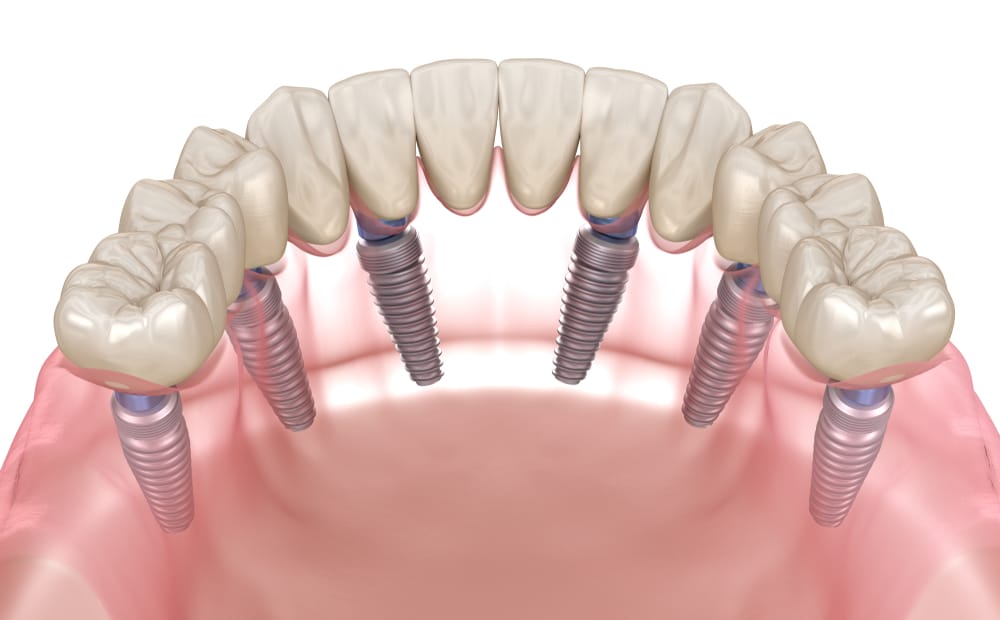
Six Implants Provide Superior Foundation
The All-on-6 system anchors a complete arch of prosthetic teeth using six biocompatible titanium posts. These posts are placed across your upper or lower jaw and work well for patients who struggle with loose dentures, have multiple failing teeth, or can no longer chew comfortably due to tooth loss.
Who is a candidate for All-on-6?
This treatment serves a wide range of patients, but the strongest candidates share a few common traits.
- Patients with multiple failing, broken, or missing teeth across a full arch
- Those who find removable dentures uncomfortable, unstable, or difficult to manage
- People with enough bone density to support implant posts without extensive grafting
- Individuals in good overall health with no active gum disease
How Titanium Posts Create a Permanent Bond
Each post functions like an artificial tooth root. The FDA requires manufacturers to complete biocompatibility testing, to show that bodily contact with the device does not cause complications before these devices reach patients. Your jawbone grows around the posts over time and forms a permanent bond.
Six implants spread chewing pressure across a wider area than conventional dentures do. Regular dentures rest on the gums and shift when you bite into firm foods. Implant posts transfer bite forces directly into bone, replicating what natural tooth roots do.
Why six posts instead of four?
The right implant count depends on your bone density and jaw anatomy.
- Upper jaw bone is typically softer than lower jaw bone, so extra posts help compensate.
- Six attachment points reduce stress on each implant site.
- Patients with previous bone loss often benefit from the added stability six posts provide.
A large meta-analysis published in Clinical Oral Implants Research found similar survival rates, with no statistical significant difference between arches supported by fewer than five implants versus five or more. That finding confirms that the right implant count is the one matched to your specific anatomy, not a fixed number applied to every patient.
The prosthetic arch locks onto the posts through precision-engineered connectors. This fixed attachment means you brush and floss normally, with no nightly removal or adhesive required. Unlike removable dentures that need frequent adjustments, implant-supported teeth hold their position through every meal and conversation.
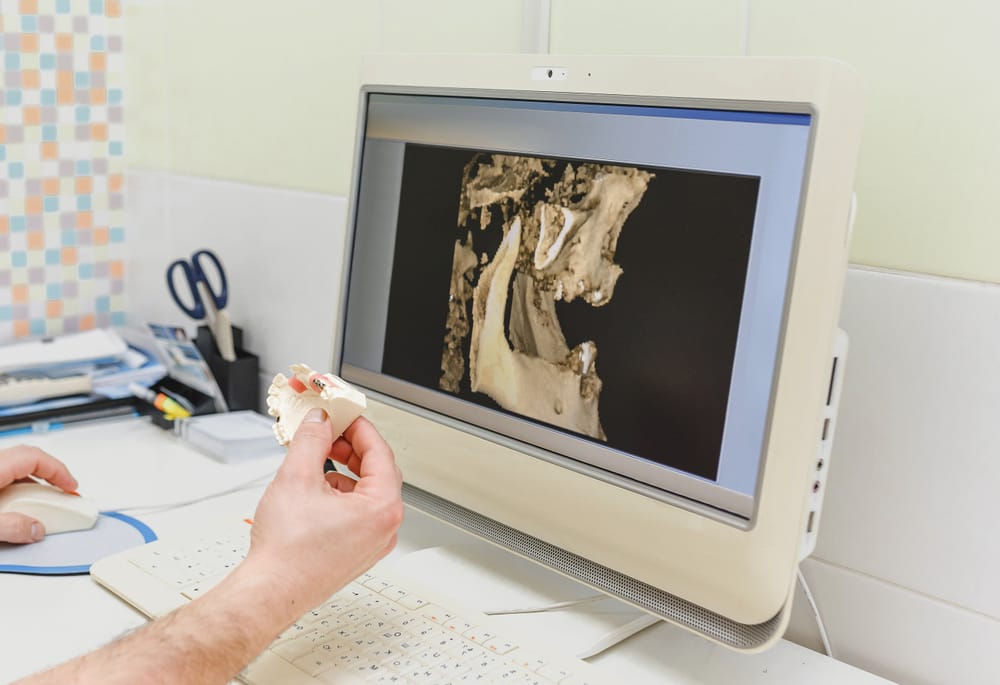
Streamlined Treatment with Immediate Results
Modern treatment starts well before any surgical appointment. Your dental team uses detailed 3D imaging to map jawbone structure, bone density, nerve locations, and sinus boundaries before placing a single post.
Planning Before the First Incision
Digital planning software generates a virtual model of your jaw. The team uses that model to determine the ideal angle and depth for each of the six implants. This reduces surgery time and improves accuracy on the day of the procedure.
Computer-generated surgical guides, built from your 3D scans, direct the drill to predetermined positions during surgery. This guided approach reduces placement errors and shortens overall surgical time.
What to Expect on Surgery Day
The surgical appointment typically runs two to four hours per arch. Here is what the process looks like from start to finish.
- You receive local anesthesia or sedation to stay comfortable throughout.
- Your surgeon creates small openings in the gum tissue and places each post at the pre-planned position.
- Temporary teeth attach to the posts on the same day through the immediate-load protocol. As research published in the Journal of Pharmacy and Bioallied Sciences confirms, immediately loaded implants osseointegrate in a manner comparable to conventional protocols, with a documented success rate of over 93% across a one-year follow-up.
- You leave the appointment with a functional smile and the ability to eat soft foods.
Most patients adapt to the temporary restoration quickly and return to normal activities within a short recovery period.
The Healing Timeline
Osseointegration, where bone grows around the implant surfaces, takes three to six months. Regular checkups during that period let the team monitor progress and confirm the posts are integrating correctly.
Once healing completes, the temporary restoration gives way to the final prosthetic arch. Zirconia resists staining, handles normal bite forces reliably, and provides a natural appearance that holds up for years.
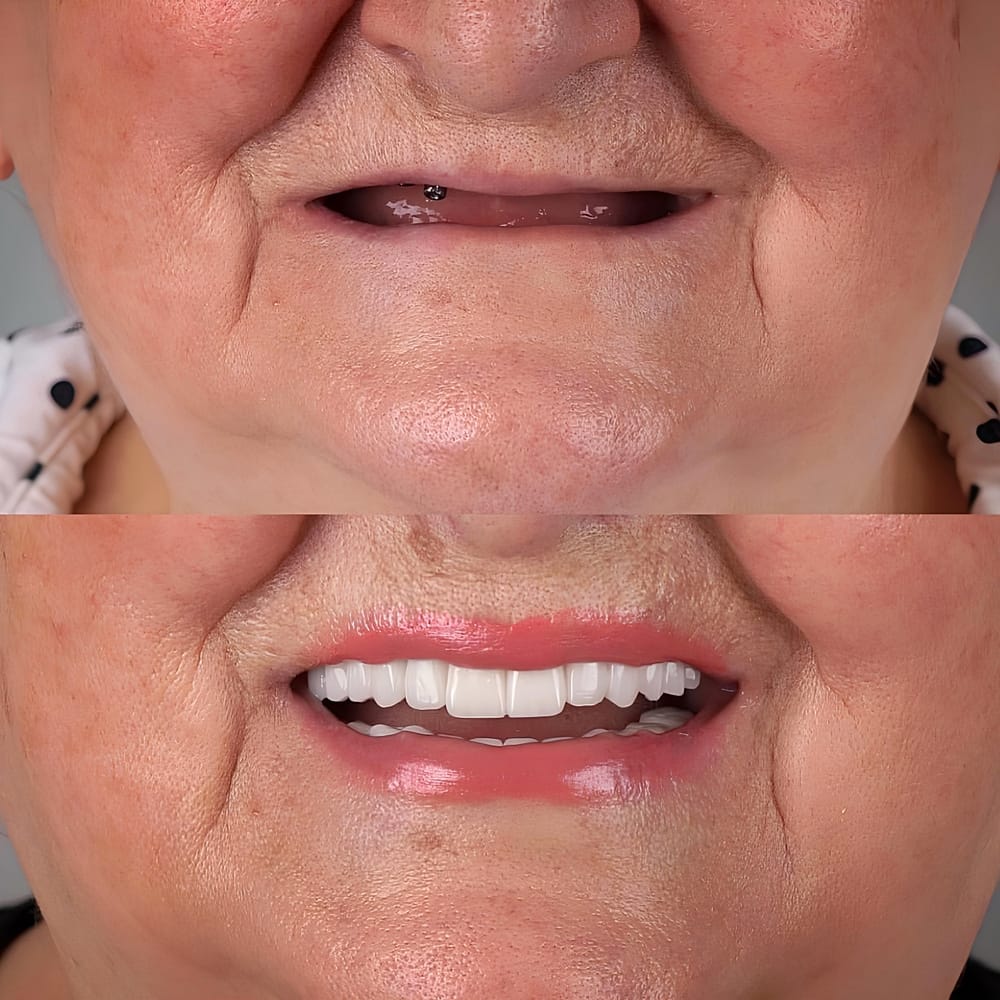
Protecting Jawbone and Facial Appearance
Tooth loss sets off a chain of changes in the jaw and face that worsen without intervention. When tooth roots disappear, the jawbone no longer receives the stimulation it needs to maintain volume. Bone begins to break down.
How Conventional Dentures Make Bone Loss Worse
Conventional dentures accelerate this process. They press against the gum surface and create forces that speed up bone breakdown. Over months and years, this produces a sunken facial appearance and dentures that fit less securely.
All-on-6 posts interrupt that cycle. When you chew, bite forces travel through the prosthetic teeth and down the posts into the bone. This signals the body to preserve that tissue.
The Quality of Life Difference
Research published in the Journal of Clinical Medicine documents that patients who switched from conventional dentures to implant-supported restorations reported significant improvements in all five OHRQoL dimensions, including chewing ability, pain reduction, and comfort with their appearance.
Preserved bone density keeps your facial proportions stable. Lips, cheeks, and chin hold their natural position relative to your teeth. This reduces the premature aging that comes with progressive bone loss.
Bone Preservation and Emotional Confidence
The psychological benefit is well documented. Patients report higher self-esteem and greater willingness to eat, laugh, and engage socially when their teeth are stable. Knowing a prosthetic cannot slip removes a persistent source of anxiety.
Placing full mouth dental implants eliminates diseased roots and infected tissue. This stops further bone destruction and creates a clean base for the new restoration.
Understanding Treatment Planning and Surgical Precision
A predictable outcome starts with a thorough diagnostic process. Your dental team reviews your medical history, current oral health, bone quality, and aesthetic goals before building a personalized plan.
Reading Your 3D Scans
3D X-rays reveal bone thickness and density at every potential implant site. Areas with insufficient bone may require grafting. The All-on-6 design often bypasses this need by angling implants toward denser regions of the jaw.
Surgical Details and Sedation Options
Here is what the surgical process involves at a technical level.
- The surgical flap technique exposes bone directly while preserving as much gum tissue as possible.
- Titanium posts carry textured surfaces engineered to promote bone integration.
- Local anesthesia numbs the area; conscious sedation keeps you relaxed. General anesthesia is rarely needed.
- A temporary bridge attaches on the same day through flexible connectors that allow slight movement during the healing phase.
Bone growth around the implant surfaces continues for several months after surgery. That process produces the firm foundation the final restoration needs to handle normal chewing forces day after day.
Gum irritation can occur during early healing. The team provides specific instructions for cleaning around the implants and managing any discomfort during that window.
Long-term Success and Maintenance
The titanium posts in an All-on-6 restoration can last decades with proper care. The prosthetic arch typically needs replacement after 10 to 15 years, depending on wear patterns, material choice, and maintenance.
Daily Hygiene for Implant-Supported Teeth
Plaque and bacteria accumulate around implant sites just as they do around natural teeth. Without consistent cleaning, that buildup can lead to peri-implantitis, an infection of the tissue surrounding the implant that can threaten the post over time.
Daily hygiene essentials include:
- Brushing around implants twice daily using a soft-bristled brush.
- Using floss threaders or a water flosser to clean beneath the prosthetic arch.
- Avoiding abrasive toothpastes that can scratch the surface of zirconia restorations.
Professional Monitoring of Your Implants
Regular dental visits every six months allow the team to remove buildup that home care cannot reach. The team also checks for loose components or early signs of complications. These visits protect a long-term investment in implant treatment.
All on 6 Dental Implants: Six Posts, One Arch, and a Smile That Holds
All on 6 dental implants offer a clinically supported path to full oral function for patients ready to move past the limitations of conventional dentures. Six posts, same-day temporary teeth, and proven bone preservation work together to address both immediate comfort and long-term oral health. If you’re weighing whether full-arch restoration fits your situation, speaking with our dentists is the clearest way to get answers specific to your bone quality, health history, and goals.
FAQs
Which is better, All-on-4 or All-on-6 dental implants?
Neither is universally better. All-on-4 uses fewer posts and works well for patients with good bone density. All-on-6 adds two extra posts for greater stability, making it a stronger option when bone quality is reduced. Your dentist determines the right fit based on your jaw anatomy and bone volume.
What are all-on-6 dental implants?
All-on-6 dental implants are a full-arch tooth replacement system that uses six titanium posts surgically placed into the jawbone. Those posts anchor a fixed prosthetic arch of replacement teeth. The result is a permanent, stable smile that functions like natural teeth, without the slipping or adhesives that removable dentures require.
How much does tooth replacement cost?
Tooth replacement costs vary widely depending on the type of restoration. A single implant typically ranges from $3,000 to $5,000, while full-arch solutions like All-on-6 can range from $20,000 to $40,000 per arch. Many practices offer financing plans to make treatment accessible. A consultation gives you an accurate, personalized estimate.
How long does the all-on-6 procedure take from start to finish?
Placing six implants typically takes two to four hours per arch, and you receive temporary teeth the same day. The healing period runs three to six months while osseointegration occurs. The final restoration follows, making the full treatment timeline roughly four to six months from consultation to permanent teeth.
What foods can I eat after getting all-on-6 implants?
A soft food diet protects the implants during initial healing. Yogurt, eggs, fish, and cooked vegetables are solid options. Once fully healed, most patients return to a normal diet. Very hard foods like ice or hard candy should still be avoided to protect the prosthetic material long-term.