

Implant dentures offer a permanent solution for patients tired of adhesives, slippage, and shrinking jawbones. Traditional removable prosthetics depend on surface adhesion that weakens as bone resorption continues. Implant-supported options anchor directly into the jaw, creating stability that conventional dentures cannot replicate.
Key Takeaways
- Implant-supported dentures anchor to titanium posts that fuse with your jawbone, eliminating slippage entirely
- Conventional dentures accelerate bone loss significantly faster than natural aging processes
- All-on-4® treatment produces measurably higher bite force than any other full-arch replacement option
- 3D CBCT scanning matches your bone density to the most effective implant approach
- Daily comfort, speech clarity, and long-term bone health all improve with implant-supported solutions
Implant-Supported Dentures
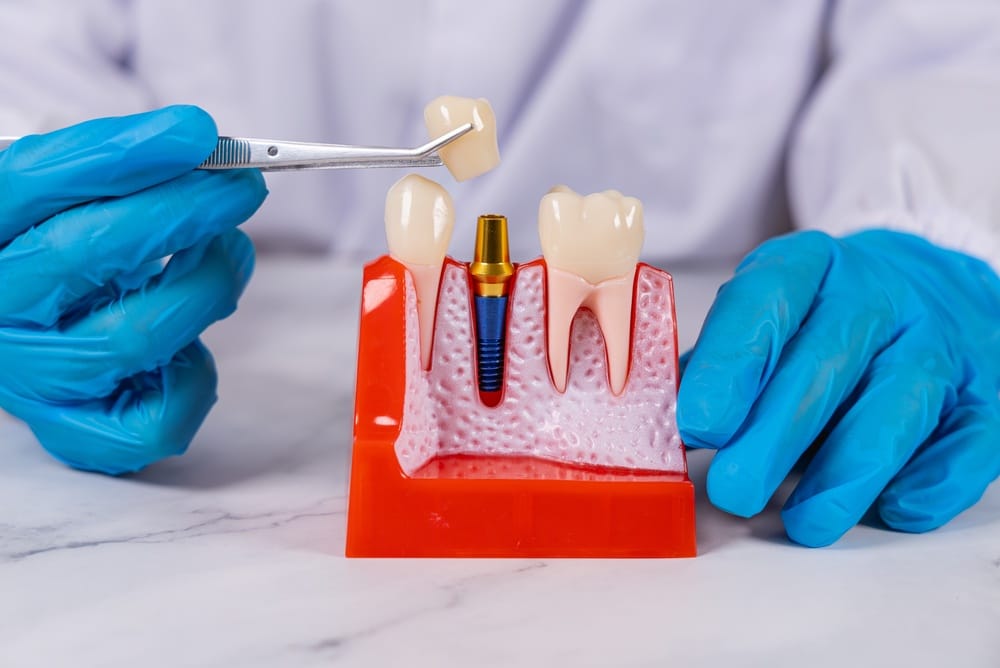
Implant-supported dentures work through direct bone integration rather than surface adhesion. A meta-analysis of randomized controlled trials published in the Zhonghua Kou Qiang Yi Xue Za Zhi confirmed that implant supported overdentures improved patient’s OHRQoL significantly more than conventional complete dentures, with patients reporting better retention, stability, and comfort across all measures.
How Osseointegration Creates a Permanent Foundation
Titanium posts are placed into your jawbone and fuse with bone tissue over several months. This process, called osseointegration, creates a permanent foundation. The result is prosthetic teeth that stay fixed during meals, conversations, and everyday activity.
Chewing efficiency improves dramatically once that foundation sets. You can bite into apples, eat steak, or enjoy corn on the cob without concern. The posts distribute chewing forces directly into your jawbone, just like natural tooth roots.
Speech, Confidence, and Daily Function
Speech clarity benefits too. Traditional dentures can shift slightly during speech, affecting pronunciation. The secure attachment of implant-supported prosthetics eliminates that movement, so your tongue and lips function naturally against a stable surface.
The psychological benefits are real. Patients report sharply reduced anxiety about slippage in social situations. Knowing your teeth stay put provides confidence that improves daily quality of life in ways that go beyond simple function.
Bone Preservation and Facial Structure
Bone preservation is one of the most significant long-term advantages. A review published in the Journal of Prosthodontic Research found that implant overdentures are superior to conventional complete dentures in several aspects, including bone maintenance, because the titanium posts transmit chewing forces that stimulate the jawbone. This stimulation maintains density and prevents gradual deterioration.
Without that stimulation, bone loss creates a sunken appearance around your mouth and cheeks. Implant-supported options help maintain natural facial contours and slow premature aging effects caused by jaw shrinkage.
Attachment Options and Daily Care
Attachment methods vary based on patient needs. Snap-on dentures connect to implants, but patients can remove them for cleaning. Fixed bridges attach permanently and require professional removal for maintenance. Full-arch prostheses offer the most natural feel.
Daily care resembles natural tooth maintenance. Brushing and flossing remain the foundation, though techniques vary by restoration type. Maintaining oral hygiene around implants is straightforward once the healing phase completes.
Why Conventional Dentures Make Things Worse Over Time
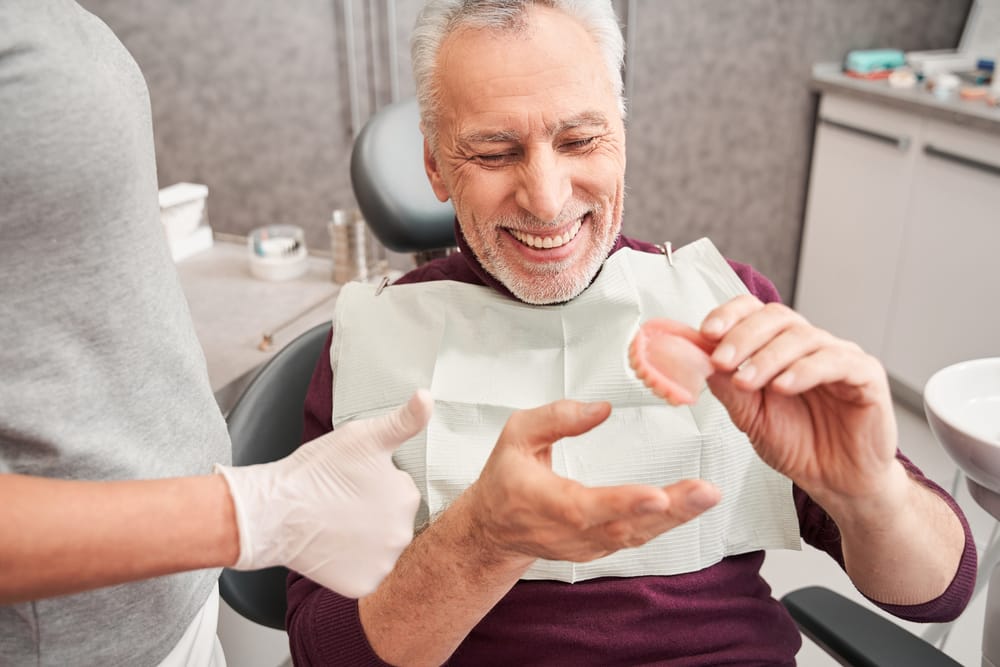
Conventional dentures do more than fail to stay in place. They actively accelerate the bone loss that makes slippage worse over time.
The Bone Loss Problem Nobody Talks About
A case-control study published in the Journal of Dentistry noted that denture wearers had significantly more maxillary and mandibular residual alveolar ridge resorption than edentulous patients who never wore dentures, with severe ridge resorption concentrated almost entirely in the denture-wearing group. Without tooth roots stimulating the bone, the jaw begins remodeling immediately after extraction and keeps going.
The pressure from a conventional denture base creates uneven bone loss patterns. Areas under constant pressure resorb faster. Areas that receive no stimulation flatten over time. The result is an irregular ridge that makes proper fit increasingly difficult.
Adhesives, Irritation, and Eating Restrictions
Denture adhesive use escalates as bone loss progresses. What starts as occasional application becomes daily necessity. Even strong adhesives cannot compensate for the fit changes caused by ongoing bone resorption. The adhesive itself can trap bacteria and irritate gum tissue.
Eating restrictions compound the problem. Hard foods like nuts or raw vegetables become difficult to manage. Sticky foods can dislodge prosthetics unexpectedly. Many patients quietly eliminate entire food categories, which affects nutritional intake and social enjoyment around meals.
Social Confidence and the Progressive Decline
Gum irritation develops as fit deteriorates. Constant pressure against soft tissue creates sore spots requiring frequent adjustments. Left unaddressed, these irritation points can progress to infection.
Social anxiety builds alongside the physical problems. Fear of slippage during important conversations or meals leads many patients to withdraw from activities they once enjoyed. The progressive nature of conventional denture problems means each year brings more bone loss and worse fit. Intervening early with implant-supported alternatives can stop that cycle.
All-on-4® Treatment Concept
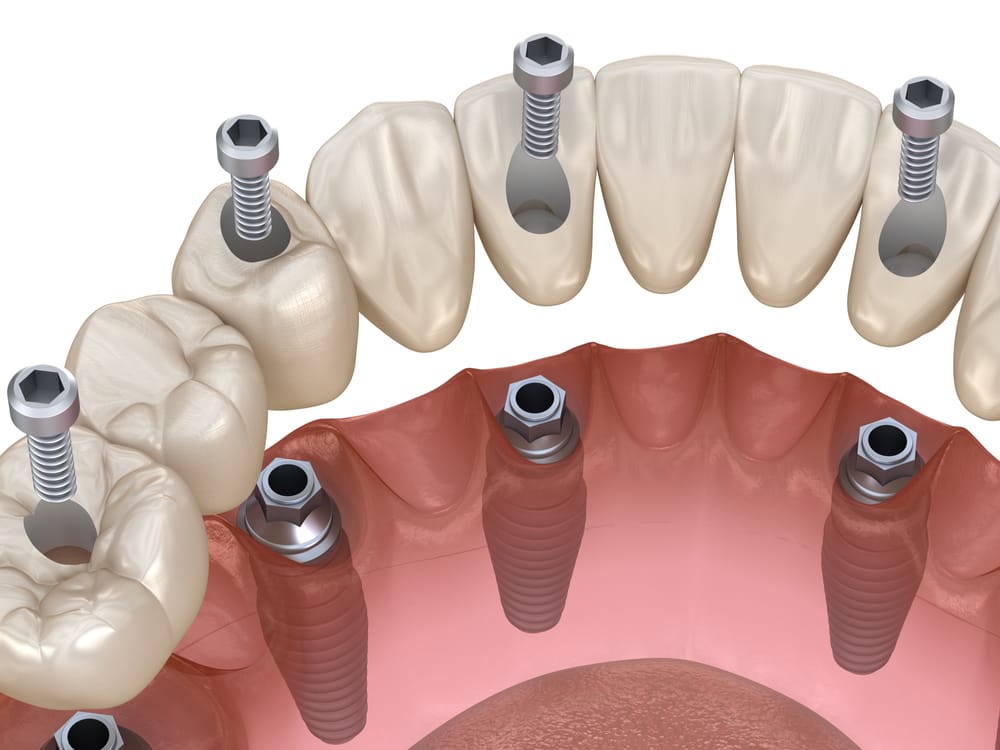
All-on-4® treatment provides the strongest measured bite force of any full-arch replacement option currently available.
Why Four Implants Outperform Every Other Option
A comparative study appearing in the Journal of the Indian Prosthodontic Society confirmed that the highest biting force and chewing efficiency were observed for all-on-four treatment concept, followed by implant-supported overdentures, and then conventional complete dentures. The technique uses four titanium implants positioned strategically to support a complete arch. Specific angulation and placement maximize stability with the minimum implant count.
The posterior implants angle forward at approximately 45 degrees rather than straight down. That angulation increases bone contact area and typically avoids anatomical structures like sinuses or nerve pathways. This design makes All-on-4® viable for patients who would otherwise require extensive bone grafting before implant placement.
Same-Day Teeth and Immediate Loading
Immediate loading protocols allow functional teeth on the same day as implant placement. You leave the office with a working set of teeth rather than waiting through a healing period without them.
Chewing efficiency measurements show All-on-4® patients achieve bite forces approaching natural dentition. The four-implant foundation distributes load across the full arch, allowing comfortable chewing of foods conventional dentures cannot handle.
Treatment Planning, Recovery, and Long-Term Results
Treatment planning uses 3D CBCT imaging to map bone density, nerve locations, and sinus boundaries before any surgery begins. Recovery focuses on protecting early osseointegration. Dietary guidelines, hygiene instructions, and follow-up appointments guide healing during the critical integration phase.
Long-term success rates compare favorably with other implant approaches, with decades of clinical study behind the technique. Full-mouth dental implants using this approach can restore upper and lower arches in a single treatment plan. The result is a complete smile transformation with teeth that function, feel, and look like natural dentition.
Digital Planning and Precision
Precision separates modern implant dentistry from earlier approaches. 3D CBCT scanning reveals bone density, nerve pathways, and sinus locations down to the millimeter. This imaging lets your dental team evaluate candidacy and identify anatomical challenges before treatment begins.
Scanning, Digital Impressions, and Guided Surgery
Digital impressions replace traditional impression materials. Intraoral scanners capture exact measurements of your mouth, and these integrate directly with treatment planning software. Your final restoration takes shape before any surgical procedure starts.
Computer-guided surgery uses that planning data to control implant placement with exceptional accuracy. Surgical guides created from your 3D scans direct each implant to its planned position. This precision shortens surgical time and improves outcome predictability.
Previewing Your Results Before Treatment Begins
Digital smile design software lets you preview expected results before committing to treatment. You can confirm that planned outcomes match your goals and request modifications before any work begins.
Bone density analysis from CBCT scans determines which implant approach suits your anatomy. Dense bone supports immediate loading. Softer bone regions may require longer healing windows or modified placement techniques.
3D Printing and What CBCT Catches That X-Rays Miss
3D printing creates surgical guides directly from your digital plan. These guides fit over existing teeth or gum tissue and direct implant placement with precision that manual positioning cannot match. CBCT imaging also detects bone health conditions that standard dental X-rays miss, catching pathology before it becomes a complication.
What Implant Dentures Can Do That Adhesives Never Will
Implant dentures outperform conventional alternatives on every measurable outcome: bite force, bone preservation, speech, and daily comfort. Whether you choose removable snap-on overdentures or a fixed All-on-4® arch, the switch addresses both immediate frustration and long-term oral health. Digital planning ensures the specific implant approach matches your bone anatomy rather than a one-size protocol.
If conventional dentures are limiting what you eat, how you speak, or how confident you feel, a consultation can map out the path to a stable, permanent solution. Schedule your free consultation today!
FAQs
How much are implant dentures?
Implant denture costs vary widely based on how many implants you need, whether bone grafting is required, and which restoration type fits your case. Snap-on overdentures generally cost less than fixed full-arch options. Most practices offer financing. A consultation with 3D imaging gives you an accurate, personalized cost estimate.
How do you choose a provider for fixed implant dentures?
Look for a provider with hands-on experience in full-arch implant cases and access to in-house 3D imaging technology. Ask how many All-on-4® or fixed arch cases they complete annually. A practice that handles planning, surgery, and restoration under one roof reduces coordination errors and simplifies your entire treatment experience.
Are implants better than dentures?
For most patients, yes. Implants preserve jawbone, restore close to natural bite force, and eliminate the slippage and adhesive dependency that conventional dentures create. They also last significantly longer. The upfront cost is higher, but long-term maintenance expenses for conventional dentures often close that gap over time.
Can you get implants after dentures?
Yes, most long-term denture wearers can still qualify for implants. The main consideration is bone volume, since conventional dentures accelerate jawbone resorption over time. Your provider will assess current bone density through 3D imaging. Bone grafting can restore enough volume for implant placement in many cases where significant loss has occurred.
Can dental implants be removed and replaced with dentures?
Implants can be removed, though it requires a surgical procedure and is not routine. Most patients do not choose to reverse course. If an implant fails or needs removal, your provider evaluates replacement options at that point. Returning to conventional dentures after implant removal is possible but rarely the recommended path forward.
Citations/Sources:
- (“implant supported overdentures improved patient’s OHRQoL” [https://pubmed.ncbi.nlm.nih.gov/28482447/])
- (“the highest biting force and chewing efficiency were observed for all-on-four treatment concept” [https://pmc.ncbi.nlm.nih.gov/articles/PMC7654204/])
- (“denture wearers had significantly more maxillary and mandibular residual alveolar ridge resorption” [https://pubmed.ncbi.nlm.nih.gov/32389732/])
- (“implant overdentures are superior to conventional complete dentures in several aspects” [https://pmc.ncbi.nlm.nih.gov/articles/PMC4146723/])