

When partial dentures slip and dental bridges irritate your gums, dental implants for a full mouth deserve a closer look. These frustrations point to bigger structural changes in your jaw. Bone loss, recurring infections, and bite misalignment rarely improve on their own. They worsen as the prostheses age and the underlying foundation continues to shrink.
This article covers the warning signs that partial solutions have stopped working. It also explains how removable prostheses speed up jawbone deterioration and what options exist for severe bone loss. Knowing when to act gives you more treatment choices and better long-term outcomes.
Key Takeaways
- Persistent denture slippage, receding gums, and TMJ pain signal that partial solutions no longer meet your oral health needs.
- Removable prostheses accelerate jawbone deterioration by failing to stimulate bone, while implant posts preserve bone volume through osseointegration.
- All-on-X and zygomatic implants enable full mouth reconstruction even for patients with severely compromised jawbones.
- Transitioning from failing partial solutions to permanent implant-supported restoration represents a long-term investment in oral health and quality of life.
- Common questions about timing, candidacy, and treatment options help clarify when implants become the appropriate next step.

Warning Signs Your Partial Solutions Are Failing
Your current prostheses may be doing more harm than good. A systematic review in Clinical and Experimental Dental Research compared conventional and implant-supported removable dentures. It found significant differences in quality of life and patient satisfaction between the two approaches. Catching these red flags early protects your remaining teeth and bone. These warning signs develop gradually but become impossible to ignore as they interfere with daily activities.
Denture slippage that won’t quit. Your prostheses shift during meals because the underlying bone has changed shape since the original fitting. Loose dentures create uneven pressure that breaks down tissue in specific spots. That pressure accelerates bone loss that caused the poor fit. Each reline provides shorter relief as the jaw continues to remodel beneath the prosthesis.
Food trapping and persistent bad breath. Gaps between your gums and dentures collect debris your toothbrush cannot reach. Bacteria thrive in these warm, moist pockets. Plaque buildup attacks enamel and irritates gum tissue, even with careful cleaning. Many patients notice this problem worsening as the seal against the gum ridge loosens with age.
Receding gums and root decay. Exposed root surfaces lack the hard enamel that protects tooth crowns. Cementum dissolves quickly when bacteria reach it. Root decay spreads fast and can destroy entire tooth structures if left alone. The receding tissue also creates larger gaps where bacteria accumulate.
TMJ pain from a shifting bite. As bone loss reshapes your jaw, your prostheses lose their original alignment. Your muscles compensate by working harder during chewing and speaking. This strain triggers headaches, neck stiffness, and joint clicking that worsens over time.
Recurring gum disease despite good oral hygiene habits. Ill-fitting dentures create hiding places for plaque that brushing and flossing cannot address. Chronic inflammation spreads to healthy areas of your mouth. Over time, this weakens the ligaments and bone that hold your remaining teeth in place.
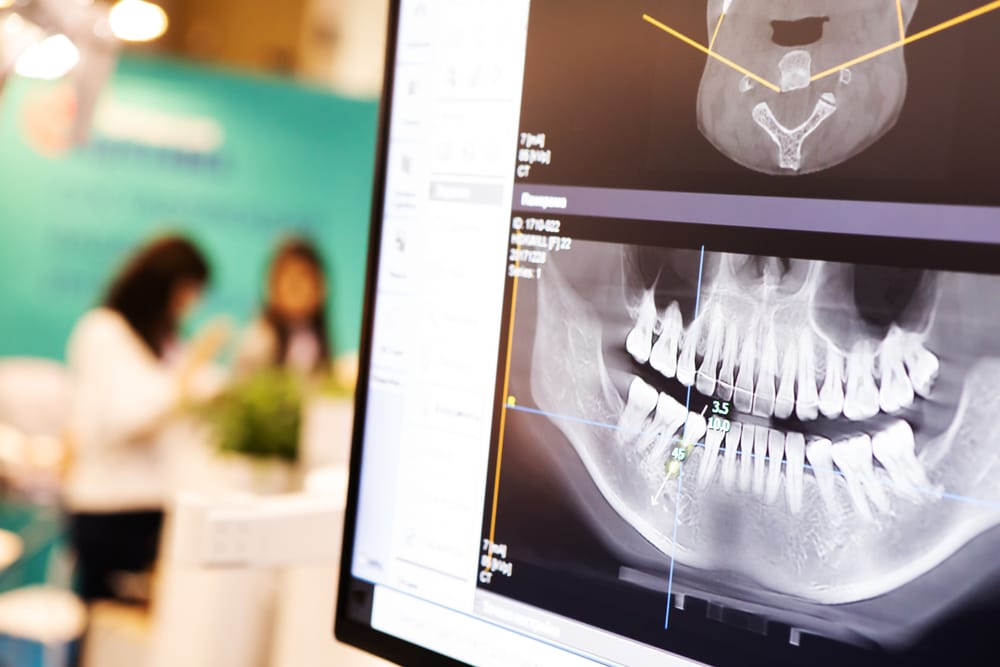
Progressive bone loss on X-rays. Digital imaging during follow-up visits to your dental office reveals shrinking bone density year after year. Your provider can compare your current bone levels to previous scans and track the trend. This objective evidence confirms when partial solutions can no longer preserve your oral health.
How Removable Prostheses Accelerate Bone Deterioration
Removable prostheses can speed up the bone loss they aim to address. Research published in the Journal of Prosthodontics found that mandibular alveolar bone height and width were significantly lower in denture wearers than in non-wearers. Dentures rest on gum tissue instead of stimulating bone directly, and the consequences compound over the years.
Why Your Jawbone Needs Stimulation to Survive
Your jawbone stays healthy through constant mechanical loading. Natural teeth send chewing forces through their roots into surrounding bone. That stimulation signals your body to rebuild and maintain bone density. Removable prostheses interrupt this cycle by spreading pressure across soft tissue rather than bone.
How Bone Loss Starts and Why It Never Stops
The resorption process begins immediately after tooth loss and continues as long as you wear removable prostheses. Many patients lose a significant portion of jawbone width within the first year after extraction. The rate slows afterward but never stops completely.
Lower jaw ridges typically lose bone faster because they bear greater chewing forces. Ill-fitting dentures create pressure points that break down specific areas unevenly. This irregular resorption makes future prosthetic fitting harder and creates an increasingly unstable foundation.
The Ripple Effect on Your Diet and Nutrition
Poor fit also limits what you can eat. Patients often avoid hard, fibrous foods that loose dentures cannot handle. These dietary restrictions lead to nutritional gaps that further weaken bone health. Skipping fruits, vegetables, and proteins compounds the structural decline already underway.
How Implants Stop the Cycle
Titanium implant posts function as artificial roots. They bond with your jawbone through osseointegration. According to StatPearls, dental implants now serve as an integral treatment modality in dentistry for patients with partial or complete tooth loss. This bond transfers chewing forces into bone, preserving the surrounding structure. The titanium surface encourages new bone cells to grow around and lock onto each post over three to six months.
Patients with implants maintain their jawbone density and facial height for decades. This prevents the sunken facial appearance that develops with prolonged denture use. Unlike prostheses that need periodic relines, well-maintained implants can last a lifetime.
Advanced Implant Options for Severely Compromised Jawbones
Years of wearing removable prostheses can leave your jawbone severely depleted. A five-year study noted in the Journal of Clinical Medicine confirmed that severe maxillary atrophy presents challenges for standard placement techniques. Traditional grafting adds months to recovery and raises costs. Advanced methods now work with whatever bone remains, often avoiding these lengthy procedures entirely.
All-on-X Implant Systems
This approach uses strategically angled posts to support a complete arch of teeth. The number of implants, typically four to eight, depends on your unique bone structure. Angled placement engages denser bone in areas less affected by resorption. It avoids the posterior regions where bone loss hits hardest. Computer modeling determines the optimal angles for maximum stability with fewer posts. Many patients avoid grafting altogether with this technique.
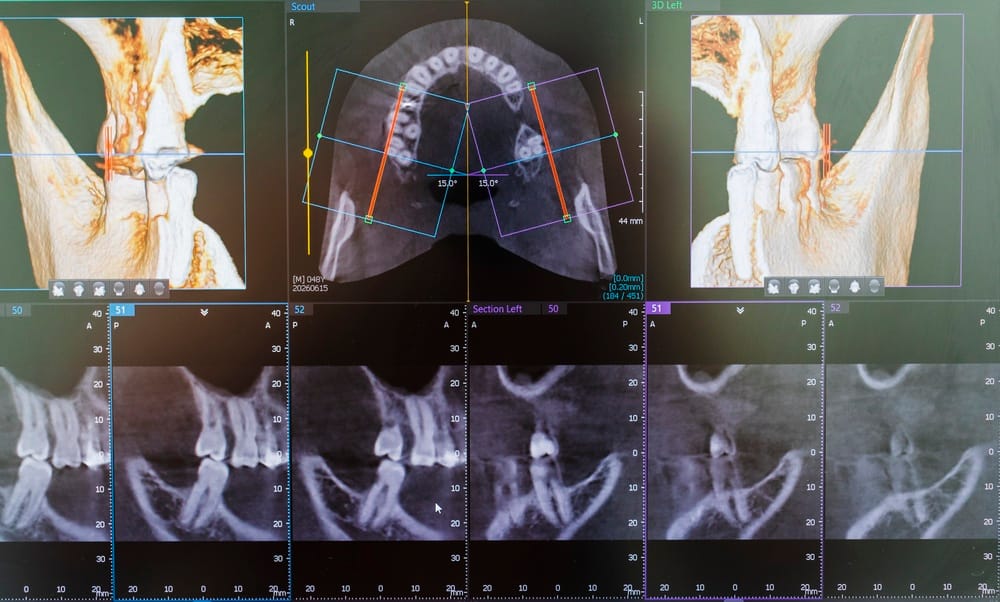
Guided surgery uses 3D CBCT imaging to map your jaw before any procedure begins. Software creates a virtual plan showing exact placement for each post. Physical guides transfer that plan to your actual surgery with precision. This technology reduces surgical time and improves healing.
Zygomatic Implants
These specialized posts anchor into the cheekbone rather than the jaw ridge. The zygomatic bone stays dense throughout life because it does not rely on tooth roots for stimulation. This approach bypasses areas of severe loss and provides stable upper arch support without grafting. The longer posts follow a specific path through the sinus to reach this naturally strong bone. Patients who previously had no option for fixed teeth often find zygomatic placement opens a reliable path.
Immediate Loading Protocols
Selected patients can receive temporary teeth on the same day as implant placement. Your dental provider uses imaging data to create surgical guides for same-day function. You leave with working teeth while the lab builds your permanent prosthesis.
Recovery plans include dietary restrictions and follow-up visits to monitor healing progress. Soft tissue recovery takes several weeks, during which temporary teeth let you eat soft foods and go about your daily routine. Complete osseointegration usually finishes within three to six months.
Stop Bone Loss for Good With Dental Implants for Full Mouth
Dental implants for full mouth offer a lasting solution when partial prostheses can no longer keep up with your changing oral health. Acting early preserves more bone, keeps treatment simpler, and opens up more options. Waiting until partial solutions fail often leads to longer, more involved procedures that cost more and require extra healing time.
The benefits go well beyond your mouth. Stable teeth restore dietary freedom, protect facial structure, and remove the anxiety tied to unpredictable dentures. Long-term savings on adjustments, relines, and replacements add up quickly. Many patients find implant therapy the smarter financial choice over a lifetime.
Slipping dentures, recurring gum problems, and bone loss on X-rays all point toward the same answer. Modern techniques can accommodate nearly every situation. A conversation with Dental Design Studios can clarify your best path forward. Schedule your consultation today!
FAQs
How much are full mouth dental implants?
Costs vary based on the number of implants, materials, and your specific bone health needs. Many practices offer payment plans to make treatment more accessible. A consultation gives you a personalized estimate based on your anatomy. Your provider can walk you through all pricing and financing options during that visit.
What are full mouth dental implants?
These are titanium posts placed directly into your jawbone to support a full arch of replacement teeth. They function like natural tooth roots and fuse with bone through osseointegration. Unlike removable dentures, they stay fixed in place. You brush and care for them just like natural teeth.
Are full mouth dental implants painful?
Most patients report less discomfort than they expected. Your provider uses local anesthesia and sedation options to keep you comfortable during placement. Mild soreness and swelling are normal for the first few days afterward. Over-the-counter pain relief typically manages any discomfort. Most people return to normal activities within a week.
How do you care for full mouth dental implants?
Daily care mirrors a natural teeth routine. Brush twice a day and floss around each implant post. Your provider may recommend a water flosser for hard-to-reach areas. Schedule professional cleanings twice a year. Consistent home care and regular checkups keep your implants stable and your gums healthy long-term.
How long does healing take after implant surgery?
Soft tissue recovery usually takes several weeks. Osseointegration, where bone fuses with the titanium posts, requires three to six months. Temporary restorations let you eat and speak normally during this period. Your provider monitors progress through follow-up appointments and adjusts care as healing progresses.
Citations/Sources:
- (quality of life and patient satisfaction [https://pmc.ncbi.nlm.nih.gov/articles/PMC8874059/]), Clinical and Experimental Dental Research
- (bone height and width were significantly lower [https://pubmed.ncbi.nlm.nih.gov/22672734/]), Journal of Prosthodontics
- (integral treatment modality in dentistry [https://www.ncbi.nlm.nih.gov/books/NBK470448/]), StatPearls
- (severe maxillary atrophy presents challenges [https://www.ncbi.nlm.nih.gov/pmc/articles/PMC11818549/]), Journal of Clinical Medicine