
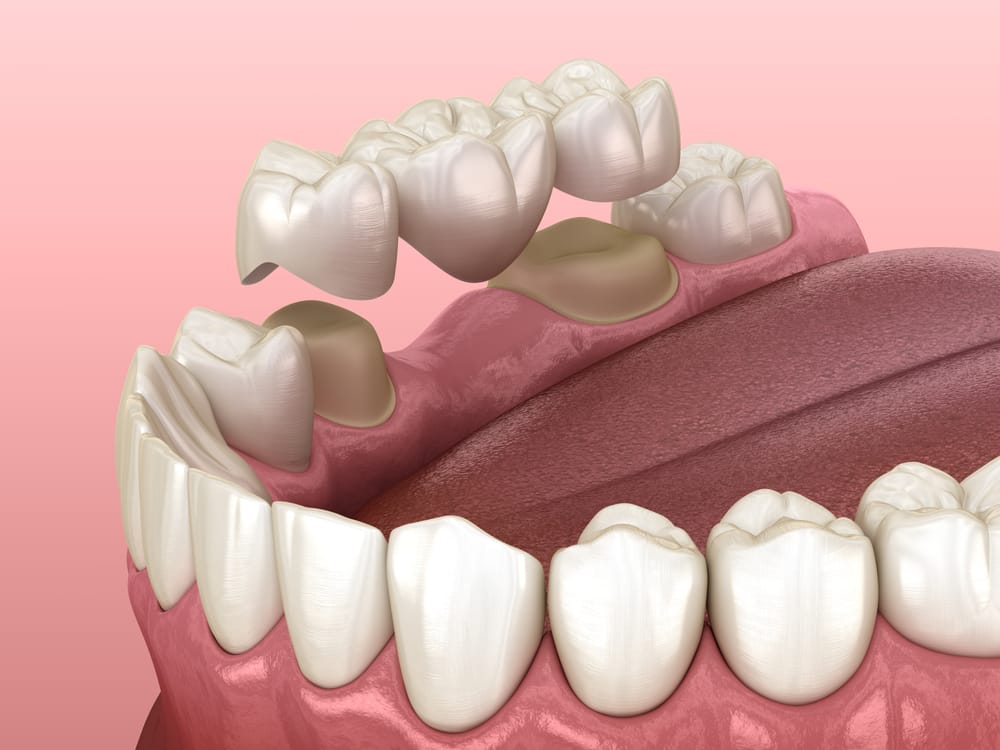
If you have a bridge dental restoration, you can likely switch to implants later. The outcome depends on what happened beneath the restoration while it stayed in place. Bone changes underneath a bridge often happen without warning. A bridge can look fine on the surface while the jawbone beneath it quietly changes shape. Understanding these changes helps you know what to expect if you decide to make the switch.
Key Takeaways
- A bridge does not stimulate the jawbone beneath a missing tooth so that bone loss can happen without warning.
- Abutment teeth lose enamel permanently and face a higher risk of root canal problems over time.
- A CBCT scan measures jawbone density and shows whether the site can support a titanium implant.
- Research shows implants often outperform compromised natural teeth over the long term.
- Converting sooner usually means simpler surgery and more predictable results.
When a Dental Bridge No Longer Serves as a Long-Term Tooth Replacement
A dental bridge spans a gap by anchoring to the natural teeth on either side, but that design has a hidden limitation. The following sections explain where that limitation shows up and why it matters over time.
Why the Pontic Never Touches the Jawbone
The artificial tooth in the middle, called the pontic, sits above the gum line. Most pontic designs are shaped to achieve a mild contact with the alveolar ridge over a very small area, rather than resting fully on the bone the way a natural tooth root does.
That missing contact creates the core problem. A dental implant works by placing a titanium post directly into the jawbone. That post copies the stimulation a natural tooth root once provided. Without that signal, the bone beneath the pontic starts to shrink.
How Bone Resorption Builds Beneath a Bridge
This shrinking happens slowly and usually without symptoms. The bridge sits over the area, so changes underneath stay hidden for years. Bone loss beneath a pontic is a predictable outcome of tooth loss, not a rare complication.
A fixed partial denture does nothing to stop this pattern. The longer it stays in place, the more bone resorption builds up at the edentulous site. That’s the spot where the tooth used to be. Over time, that lost bone can limit your options later.
By the time a patient decides to switch to implants, less bone may remain to anchor a titanium post. Your dental team may then recommend a bone graft or ridge augmentation procedure before implant placement can proceed. Ridge augmentation rebuilds the height or width of the jaw to create a stable base. That step adds time and healing to the process.
The Role of Oral Hygiene in Long-Term Outcomes
Daily habits during the years you wear a bridge matter too. Plaque around the abutment teeth and beneath the pontic can lead to gum disease. This weakens the bone and tissue implants will depend on later.
Patients who keep up regular dental check-ups and steady hygiene routines often arrive with more bone volume to work with.
What Bone Loss and Abutment Teeth Conditions Mean for Titanium Implants
Two separate issues shape how complex a bridge-to-implant conversion becomes: the condition of the abutment teeth, and the jawbone at the implant site. The sections below break down each factor.
How Abutment Teeth Wear Down Over Time
Building a traditional bridge requires shaping down the supporting teeth to hold dental crowns. That process removes enamel permanently. Once enamel is gone, those teeth become more prone to decay. They’re also more likely to need root canal treatment down the road.
Findings noted in Clinical Oral Implants Research indicate that survival rates of fixed dental prostheses dropped when abutment teeth had undergone root canal treatment. Endodontically treated supporting teeth showed a hazard ratio of 8.29 compared to vital teeth supporting bridges. Tooth abutments supporting fixed partial dentures had an even higher hazard ratio.
That hazard ratio means bridge failure risk climbs more than eightfold when supporting teeth have had root canals. If an abutment tooth fails, the entire bridge often fails with it.
Why CBCT Scans Matter Before Implant Placement
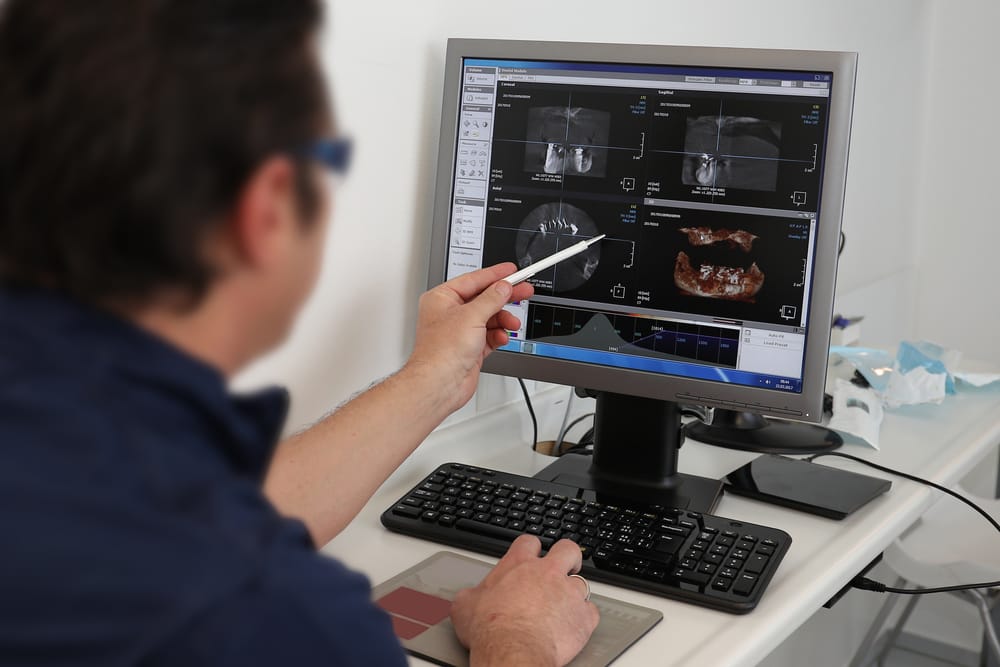
Before placing titanium implants, your dental team needs to know how much bone volume remains at the site. That requires cone beam computed tomography, commonly called CBCT. A CBCT scanner builds a three-dimensional image of your jaw and measures bone density.
StatPearls confirms that CBCT has a great role in dental applications. If the scan shows too little bone, your dental team recommends a graft before implant placement can proceed. The amount of grafting needed depends on how long you wore the bridge and how much resorption occurred.
Connecting Bone Health and Gum Health
Abutment tooth health and jawbone support connect directly. A bridge that fails because an abutment tooth breaks down can speed up bone loss at the site. Evaluating both together gives your dental team the full picture before making any surgical decision.
Gum health matters here too. Your dental team must treat active gum disease before implant work begins, since infection interferes with how well the implant bonds to the bone. Your dental team checks periodontal support as part of the pre-implant evaluation.
How the Surgical Process for Implant-Supported Prostheses Actually Works
Evidence for switching from a bridge to implant-supported prostheses is strong, especially when the change happens before serious deterioration sets in. Here’s what the research shows and what the process looks like in practice.
What the Research Says About Timing
A study featured in the Journal of Prosthetic Dentistry found no real survival difference between treated teeth and implant-supported prostheses during the first three years. Over the long run, implants held up better as survival of endodontically treated teeth declined over time.
That finding points to a simple takeaway. Converting earlier tends to produce steadier results with less grafting beforehand. Waiting until a bridge fails usually means more bone loss and more work to fix it.
The Step-by-Step Conversion Sequence
The typical sequence starts with removing the existing bridge. If the abutment teeth are no longer viable, tooth extraction may be part of the plan. The dental team then checks periodontal support and gum health before moving forward.
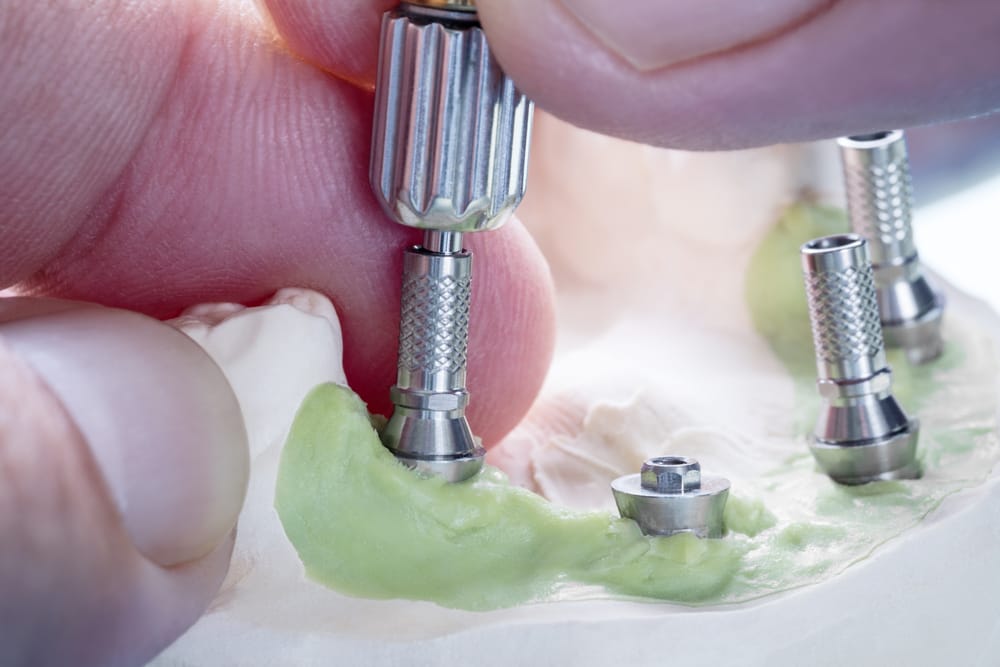
Once your dental team clears the site and any graft has healed, surgical placement of the titanium posts can proceed. The implants fuse with the surrounding bone over a healing period that spans several months. During this healing window, bone grows around the post to form a stable anchor. Avoid loading during osseointegration for 3-4 months in the mandible and 6-8 months in the maxilla.
This timeline varies by patient. Bone density, jaw location, and overall health all influence how quickly the implant stabilizes. Denser bone in the lower jaw typically integrates faster than the softer bone found in the upper jaw, which is why your dental team may set different follow-up schedules depending on where the implant was placed.
Good oral hygiene during recovery directly affects how well the implant bonds. Once your dental team confirms bonding, they attach the final restoration. Implant-supported bridges take over the job of the original denture without leaning on nearby natural teeth.
What Full Arch Conversions Look Like
For patients missing most or all of their teeth in an arch, the same idea applies on a larger scale. Full mouth dental implants anchor a full arch restoration directly to the jawbone. This removes the need for natural tooth support.
Implant supported dentures work similarly. They use strategically placed posts to hold a prosthetic that restores chewing strength across the arch.

What Bone Loss Means for Your Bridge Dental Work to Implant Switch
Converting a bridge dental restoration to implants works for most patients. The outcome depends on how much bone remains and how healthy the supporting teeth still are. The longer a bridge stays in place, the more bone resorption accumulates, and the more prep work implants typically need.
Titanium implants deliver steady chewing strength and support long-term bone health in a way a traditional bridge cannot. If you’re weighing this decision, talk with a restorative dental specialist. We can check your bone volume and gum health to help you decide. Every case is different, and a quick evaluation can show exactly where you stand today!
FAQs
What happens to the abutment teeth after the bridge is removed?
Your dental team evaluates the abutment teeth individually once the bridge is gone and may keep any that are healthy enough for new crowns. If they have significant decay or endodontic complications, your dental team may recommend extraction and replacement with a single dental implant at each site.
Is a dental bridge permanent?
A dental bridge isn’t permanent in the sense of lasting forever, but it’s a fixed restoration cemented in place rather than removable like a denture. With good care, a bridge can last many years. Eventually it may need replacement due to wear, decay in the supporting teeth, or changes in the jawbone underneath.
How long does a dental bridge last?
Most dental bridges last around 10 years with proper care, though many patients get longer use out of them. Lifespan depends on your oral hygiene, the health of the abutment teeth, and how much daily wear the bridge takes. Regular checkups help your dental team catch problems early.
How do you clean a dental bridge?
Brush your bridge twice daily just like natural teeth, paying close attention to the area where the pontic meets your gums. Use a soft-bristled brush and fluoride toothpaste. Plaque buildup around the abutment teeth is the biggest risk to a bridge’s longevity, so consistent brushing habits matter.
How do you floss a dental bridge?
Regular floss can’t slide between a bridge and your gums, so you’ll need a floss threader, superfloss, or a water flosser instead. Guide the floss under the pontic and around each abutment tooth daily. This step is essential since plaque trapped there is a common cause of bridge failure.